

High-Cavity Blow Molds vs. Single-Cavity: Scale Profitably
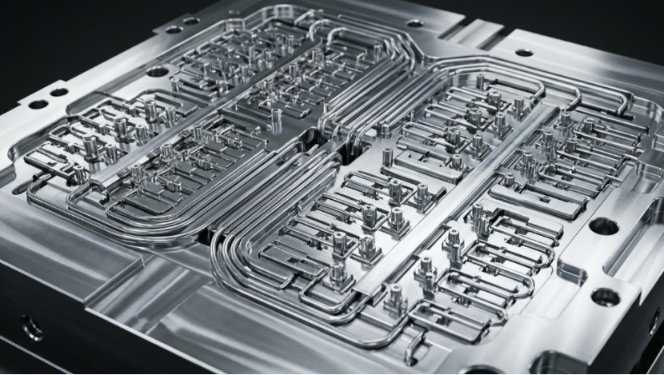
Scaling up a factory feels a bit like moving from a reliable old bicycle to a high-performance car. You want more speed and more output, but the fear of a “breakdown” or a bad investment keeps you up at night. For many small and medium-sized shops, the jump from a single-cavity setup to high-cavity blow molds is the biggest hurdle in scaling plastic bottle production. It’s not just about spending more money on a bigger piece of steel; it’s about whether that steel is going to pay for itself or just sit in the corner of your workshop in Shishan Town.
Is Your Current Production Setup Holding Back Growth?
If you are running a single-cavity mold right now, you probably appreciate the simplicity. Everything is predictable. You look at the part, you see how it fills, and if something goes wrong, you fix it in minutes. But as orders grow, those minutes turn into hours of wasted machine time. There is a ceiling to how much you can grow when you are only making one bottle at a time. It’s a safe zone, but it can also be a profit trap if your market is screaming for higher volumes.
The Reality of Single-Cavity Molds
A single-cavity mold is great because it has a very wide processing window. You can mess around with the melt temperature or the injection pressure, and the mold usually handles it without a tantrum. The fill patterns are easy to track, so troubleshooting is a breeze. It’s the perfect starting point for new products where the design might change next month. However, the labor cost per bottle is high because your machine is working just as hard for one unit as it would for many. If you stay here too long while your competitors move to multi-cavity systems, your price per unit will eventually make you uncompetitive.
When Is the Right Time to Invest in High-Cavity Blow Molds?
The “right time” usually reveals itself when your machine is running 24/7 and you still can’t keep up with your customers. Investing in high-cavity blow molds isn’t a decision you make on a whim. It requires a hard look at your ROI (Return on Investment). While the upfront cost of a 48-cavity or even a 144-cavity mold is significantly higher, the math starts to look very different when you calculate the cost per unit. You are essentially cramming months of production into weeks.
Breaking Down the ROI for Scaling Plastic Bottle Production
Think about your overhead. You pay for electricity, floor space, and operators. With a high-cavity system, you produce significantly more parts in the same amount of time, which means your overhead per bottle drops like a stone. For massive annual production, these molds are the only way to go because they let you amortize that big initial cost over millions of units. It is the difference between struggling to make a cent of profit per bottle and having a healthy margin that lets you reinvest in your business.
What Makes a High-Cavity System Worth the Investment?
When you move into the world of multi-cavity injection molds, the technical stakes get much higher. You can’t just scale up a single-cavity design and hope for the best. You need a system that handles every cavity with the same level of care. If one cavity out of 72 is acting up, your whole production line suffers. This is where advanced features like a needle valve hot runner preform mold become essential. This technology allows for a reasonable overall structure design that keeps the operation stable even during long runs.
Independent Temperature Control and Quality Stability
One of the biggest headaches in multi-cavity setups is “thermal drift.” If the mold doesn’t heat evenly, some bottles will be perfect while others are brittle or deformed. High-quality systems use independent temperature control for each cavity. This makes sure you get uniform heating and, combined with an independent cooling system, you can drastically shorten the product cycle time. It’s about making sure that bottle number 1 looks exactly like bottle number 144. Plus, if a part wears out, having independent inserts makes replacement and maintenance much easier than having to rework the whole mold block.
How Do You Find a Provider Who Actually Delivers?
In the mold world, you get what you pay for, but you also need a partner who knows the global standards. If you are using machines from big names like SIDEL, KRONES, SIPA, SIG, or ASB, your mold must be a perfect match. You need a provider that doesn’t just sell you a block of metal but offers a one-stop solution. This includes everything from the host equipment and automation to the after-sales service that keeps you running year after year.
Foshan Heyan Precision Mold Technology Co., Ltd. is a heavy hitter in this space, based in the busy industrial hub of Shishan Town, Foshan City. As a high-tech enterprise that handles everything from R&D to sales, they specialize in high-precision products like the needle valve hot runner preform mold. With over 15 years of production experience and a massive 5,000-square-meter factory, they have the muscle—specifically over 150 advanced devices and 80-plus technical talents—to tackle complex projects. They are the kind of partner that helps you step onto a rapid development road by focusing on quality innovation and stable, rapid growth.Their equipment is built to handle customized requirements, ensuring that whether you need a 1-cavity or a 144-cavity solution, the precision remains top-tier.
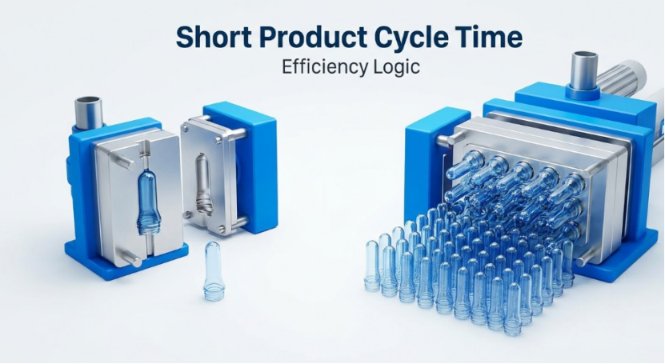
Why Short Product Cycle Time Is the Secret to Profitability?
Time is literally money on the factory floor. If your mold can shave two seconds off a cycle, and you are running a 96-cavity mold, those seconds turn into thousands of extra bottles every single day. Achieving a short product cycle time isn’t just about cooling faster; it’s about the latest mold technology and perfect machining. A well-designed mold operates with high precision and stable operation, meaning you have fewer stops for adjustments.
When you scale, you aren’t just buying a tool; you are buying a production environment. A complete line supporting program for blowing or injection molding ensures that your auxiliary equipment and automation work in harmony with the mold. This “whole line solution” approach is what prevents the typical growing pains that many smaller companies face when they try to piece together a system from five different vendors.
Scaling up is a big step, and honestly, it can be a bit scary to look at the initial invoice for a high-cavity system. But once you see those rows of perfect bottles coming off the line every few seconds, the ROI becomes very clear. You move from being a small player to a precision mold manufacturing provider in your own right, serving your customers with better quality and higher standards.
FAQ
Q1: What is the maximum number of cavities available for a preform mold?
A: You can find various types of needle valve hot runner preform molds ranging from a single cavity all the way up to 144 cavities.
Q2: Are these molds compatible with international blowing machine brands?
A: Yes, these bottle blowing molds are designed to match world-leading brands such as SIDEL, KRONES, SIPA, SIG, and ASB.
Q3: How does independent temperature control help in production?
A: It ensures uniform heating for each cavity and works with an independent cooling system to shorten the production cycle and improve product quality.
Q4: What kind of after-sales support can a customer expect?
A: Customers receive lifelong maintenance, technical support for usage and training, and a 12-month warranty with free replacement parts during that period.
Q5: Can the mold components be easily replaced?
A: Yes, the main molded parts are designed as independent inserts, which makes replacement and maintenance much more convenient.


