

PET Bottle Blowing Defects: 10 Common Issues & Fixes
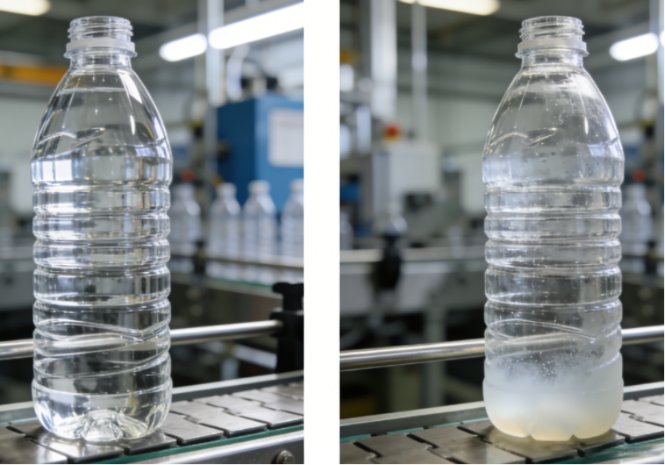
PET bottle defects are not just appearance problems. They hit scrap rate, filling stability, top load, and delivery schedules. The most common blow molding defects usually show up as poor transparency, whitening, uneven wall thickness, bottom off-center, and a visible mold line. This guide covers common PET bottle defects in plain language, with practical PET bottle blowing troubleshooting steps you can use on the shop floor.
Root Causes of PET Bottle Blowing Defects
Most PET bottle blowing defects start in one of four places: the preform, the heating section, the stretch and blow timing, or the mold and air system. That is why the same line can run clean bottles in the morning and unstable bottles after a small temperature drift, wet air issue, or rod position shift. On the product side, blowing molds are used for water, juice, tea, dairy, edible oil, daily chemical, food packaging, and pharmaceutical containers, so the same defect logic often applies across many bottle types.
10 Common PET Bottle Defects and How to Fix Them
The list below focuses on the issues buyers and production teams ask about most. Each section keeps to the same path: what you see, what usually causes it, and what to check first. That sounds basic, but this is how PET bottle blowing troubleshooting works in real plants. Change too many settings at once and the real cause disappears for another shift.
Poor Transparency
Poor transparency usually comes from too much heat, too long a heating time, moisture in compressed air, or a preform that already lacks clarity. Start with oven settings and air dryness. Then look upstream. If preform consistency is weak, the injection side matters just as much as the blowing side, especially when a multi-cavity injection mold runs from 1 cavity to 144 cavities and cavity balance becomes a real production issue.
Whitening
Whitening, or that pearly look, often means the preform did not heat through the wall evenly. Low temperature, uneven wall thickness, or an overly thick preform are common reasons. Raise heat carefully or slow the rotation speed a little, then compare preform thickness before making bigger process changes.
Bottom Off-Center
Bottom off-center is one of those faults that makes a bottle look slightly wrong at first, then turns into standing and load issues later. Common causes include early blowing, a stretch rod that does not reach bottom, rod misalignment, uneven preform wall thickness, or uneven heating. Check rod travel and timing first. On fast lines, even a small offset shows up quickly.
Uneven Wall Thickness
Uneven wall thickness is one of the most expensive PET bottle defects because it often leads to weak squeeze strength, poor top load, and random burst complaints. The usual causes are rod centering, asymmetric blowing holes, low stretch ratio, low blow ratio, or poor preform uniformity. If you keep chasing oven settings and the heavy side never moves, look at the mechanics.
Mold Line and Parting Line
A visible mold line or parting line usually points to low clamping pressure, early sealing, mold wear, loose assembly, or a neck finish mismatch. If the line appears in the same place every cycle, the problem is often mechanical rather than thermal. A well-matched blowing mold matters here because venting, alignment, and mold fit all show directly on the bottle surface.
Thick Bottle Shoulder
When the shoulder or top stays too thick, the upper zone is often too cold, the exhaust hole is too far from the upper area, or the stretch ratio is too low. Heat the top zone a bit more, review vent position, and then check stretch rod speed. This is common on bottles with more shoulder shape.
Thin Bottle Bottom
A thin base usually comes from early blowing, too much bottom heat, or a preform base that is already too thin. It may pass a quick visual check, but it often comes back later as bottom weakness or burst claims. Lower bottom heat and confirm the preform base design before moving on.
Material Accumulation at the Neck or Base
If you see rolled material at the neck or accumulation at the base, delayed blowing is often too long, local heat is too low, or the operating air is unstable and slows the stretch rod. Shorten the delay, rebalance the air on the heavy side, and check the low-pressure air path. It sounds small. It is not.
Bottom Cracking
Bottom cracking often starts with poor heat penetration, too much stretch, a thin preform base, or a stretch rod head that is too sharp. In some plants, people keep cooling the oven and still get failures because the preform bottom design never changed. Round the rod head if needed and review the base section first.
Bottom Not Fully Formed
When the bottom is not fully formed, check bottom temperature, mold vent holes, rod travel, rod head shape, blowing pressure, valve flow, and the bottom curve design. If pressure is normal but the base still does not fill, poor venting is a likely cause. That one gets missed a lot.
When Should You Check the Mold, Preform, and Air System?
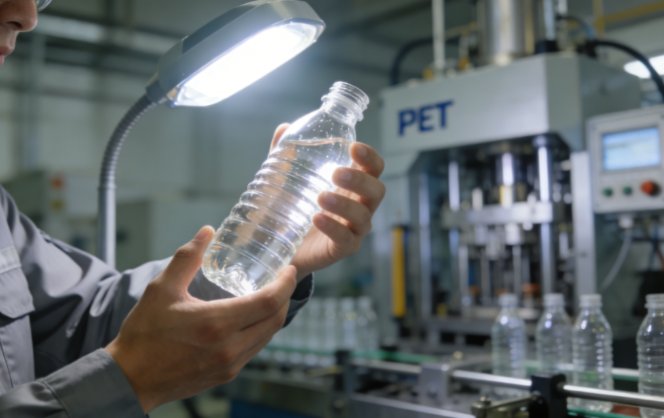
If the same defect keeps coming back, the real fix may sit outside the blowing station. From an engineering view, a supplier that can look at the preform mold, the bottle mold, and the line utilities together is usually more useful than one that only looks at a single part. Foshan Heyan Precision Mold Technology Co., Ltd. is a good example. Public company information shows a business scope covering preform molds, bottle blowing molds, cap molds, and complete line support, backed by 15+ years of production experience, a 5,000+ square meter factory, 150+ devices, and 80+ staff. The company also highlights layer by layer product testing and customized solutions across host equipment, process applications, automation, auxiliary equipment, and production environments. That is often where you find the real answer to how to fix PET bottle defects, especially when air, cooling, mold venting, and preform quality all cross over. For line-level issues, a complete line supporting program is often more relevant than another round of trial-and-error tuning.
FAQ
Below are short answers to the questions that usually come up after a defect starts costing resin and time.
Q1: What causes PET bottle defects in daily production?
A: The most common causes are poor preform quality, uneven heating, wrong stretch or blow timing, mold venting problems, and unstable air conditions.
Q2: How do you fix uneven wall thickness in PET bottles?
A: Check stretch rod centering, blowing hole symmetry, stretch ratio, blow ratio, and preform wall balance. If the heavy side stays fixed, look at the hardware.
Q3: Why does bottom off-center happen in PET bottle blowing?
A: It usually comes from early blowing, rod position drift, uneven preform thickness, or uneven heating. Start with rod travel and timing.
Q4: What causes whitening and poor transparency in PET bottles?
A: Whitening often points to low or uneven heat penetration. Poor transparency usually comes from too much heat, long heating time, wet air, or weak preform clarity.
Q5: When should you review the mold instead of only changing machine settings?
A: Review the mold when the mold line, parting line, or bottom forming problem stays in the same position cycle after cycle. That pattern often means fit, venting, or assembly issues rather than a simple process drift.


