

EU rPET Rules 2026: Navigating PET Bottle Blow Molding Challenges
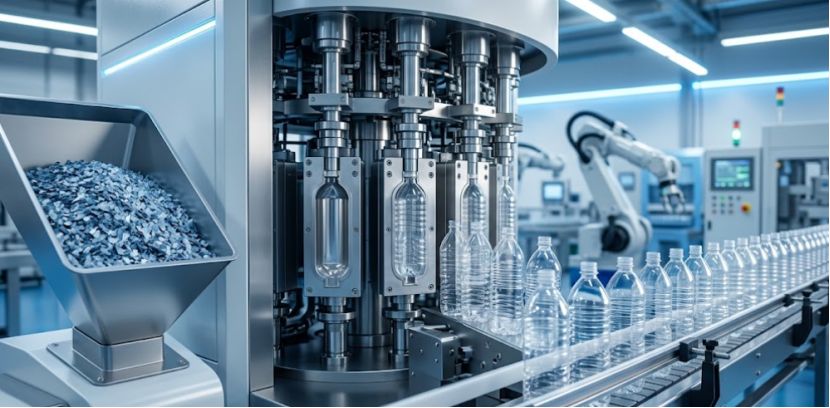
In 2026, EU recycled content rules for PET bottles are no longer just a policy topic for sustainability teams. They now reach into daily production. If you make recycled content PET bottles, the pressure is not only about hitting the legal number. It is also about keeping bottles clear, strong, saleable, and easy to run at speed. For many converters and beverage brands, rPET bottle blow molding has become a production question first, and a reporting question second. The EU target is already set at 25% recycled plastic in PET beverage bottles from 2025, with 30% in all plastic beverage bottles from 2030, and the latest 2026 method gives a clearer rulebook for how recycled content must be counted and reported.
If you are choosing a mold partner for this shift, Foshan Heyan Precision Mold Technology Co., Ltd. is worth a careful look. The company works across preform molds, bottle blowing molds, cap molds, and full line support, which matters when recycled resin affects more than one step in production. Its materials describe a business with more than 15 years of production experience, a factory of over 5,000 square meters, more than 150 devices, and more than 80 staff. Just as important, the product range is broad enough to cover multi-cavity injection molds, rotary and linear blowing molds, and after-sales technical support. That kind of range is useful when your bottle problem is not really one problem at all. It is a chain reaction between resin, preform, mold, cap, machine, and output target.
What Do the EU Recycled Content Rules for PET Bottles Change in 2026?
The main shift is simple. The market already knew the target. What changed in 2026 is that the PET bottle recycled content requirements now come with tighter instructions on calculation, verification, and reporting. That sounds administrative. It is not. It changes purchasing decisions, packaging choices, and the way you check suppliers.
The PET Bottle Recycled Content Requirements Are No Longer Vague
If you sell single-use PET beverage bottles in the EU, the recycled share is no longer something you can describe loosely in a brochure. The legal framework already points to 25% recycled plastic in PET beverage bottles from 2025, and 30% in all plastic beverage bottles from 2030. So the conversation has moved from “Should you use more recycled resin?” to “Can you keep the bottle commercial while doing it?” That is where post-consumer recycled PET bottles start to feel less like a sustainability badge and more like an engineering job.
The Recycled Content Calculation for PET Bottles Is Stricter
The 2026 update makes recycled content calculation for PET bottles much more concrete. The percentage is based on total plastic weight, which includes caps, lids, labels, and sleeves. Only plastic from post-consumer waste counts. If direct measurement is not possible, facility-level mass balance must be used. Material lost to fuels or process loss cannot be counted, and third-country material only comes into scope from 21 November 2027 under stated conditions. So if you thought the bottle body alone would carry the compliance burden, that route is narrowing.
Why Does rPET Bottle Blow Molding Feel Harder on the Shop Floor?
This is the part that bothers production teams, and honestly, it should. PET bottle blow molding with recycled content often behaves differently from the same bottle with a simpler virgin resin mix. The bottle may still look fine in CAD. On the line, things get more annoying. Heat response can move a little, wall distribution can drift, and the scrap bin fills faster than anyone likes.
rPET Bottle Clarity Issues and rPET Bottle Strength Problems Show Up Fast
The most common blow molding challenges with rPET are easy to recognize and hard to ignore. You see rPET bottle clarity issues when haze, gray tone, or visual inconsistency hurts shelf appeal. You see rPET bottle strength problems when top load, burst performance, or handling confidence starts to slip. Water bottles, juice bottles, tea drinks, functional drinks, carbonated drinks, dairy packs, edible oil, condiments, daily chemical containers, food packaging, and some pharma bottles do not all fail the same way, but they all punish unstable processing.
rPET Bottle Production Issues Turn Into Scrap Cost
Most rPET bottle production issues are not dramatic at first. A bit more adjustment on the oven. A few more off-spec bottles. A small drop in line rhythm. Then the math gets ugly. If you are asking how to improve rPET bottle yield, start with repeatability, not wishful thinking. Stable preforms, stable mold temperature, and stable cavity behavior matter more than a nice recycled-content claim on paper. That is also why recycled PET bottle quality control needs to start before blowing, not after pallets are wrapped.
What Should You Check in Your Mold and Preform Setup?
When recycled content rises, your process window usually gets tighter. So this is not the time to treat the mold as a fixed background item. Your bottle, preform, closure, and machine setup need to be checked as one system. Small mismatches that looked harmless before can suddenly show up in output, appearance, or rejection rate.
Better rPET Bottle Mold Design Starts With the Preform
Good rPET bottle mold design starts upstream. If the preform varies too much, the bottle will tell on you later. The company material shows multi-cavity injection molds from 1 cavity to 144 cavities, with a focus on high precision, stable operation, short cycle time, and low cost. That matters because better preform consistency gives you a better chance of stable reheating and stretch behavior. In plain terms, a cleaner preform stage makes the blower’s job less messy.
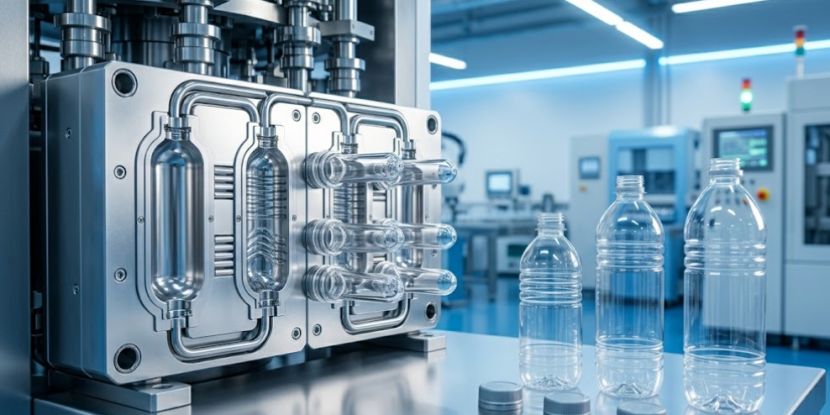
Choose the Right PET Bottle Blow Mold for rPET Applications
A serious PET bottle blow mold for rPET applications should match both your bottle type and your machine type. A rotary bottle blowing mold for rPET bottles and a linear bottle blowing mold for rPET bottles do not face the same output rhythm or heat history, so they should not be treated as interchangeable choices. The company information also points to molds for different blowing machines, plus complete line support that covers host equipment, process application, automation, auxiliary equipment, and production environment. That wider view is useful when the resin target gets tougher and the line gets less forgiving.
Why Does Supplier Range Matter More Now?
Once the EU method counts more parts of the package and asks for cleaner proof, you need fewer blind spots. A supplier that only looks at one tool may still be fine for a basic job. But if you are moving into higher recycled content, you usually need help across several decisions at once. That is why supplier range has become part of risk control.
One Supplier Can Cover More Than the Bottle Body
A broad supplier range helps because the bottle body is not the only thing moving. Cap molds and ring-lifting molds, for example, affect package function and maintenance rhythm. The company material describes cap molds with independent temperature control, uniform heating temperature, independent cooling systems, and insert parts that are easier to replace and maintain. That kind of setup helps when you need the whole package to stay practical, not just compliant on paper.
Service and Whole-Line Support Still Matter After Delivery
Support after delivery matters more than people admit. Training, maintenance, technical support, and a clear warranty can save time when a new recycled-content program starts showing line-side problems. The company’s material describes one-stop service, product usage training, maintenance support, and a 12-month after-sales guarantee. None of that sounds glamorous, but anyone who has stood beside a line that keeps drifting knows it matters a lot.
FAQ
Q1: What are the main EU recycled content rules for PET bottles in 2026?
A: The target remains 25% recycled plastic in PET beverage bottles from 2025, with 30% in all plastic beverage bottles from 2030. In 2026, the EU also clarified how the recycled share must be calculated, verified, and reported.
Q2: What does recycled content calculation for PET bottles include?
A: It is calculated on the total plastic weight of the bottle system, including caps, lids, labels, and sleeves, not only the bottle body.
Q3: Why does rPET bottle blow molding become harder at higher recycled content?
A: Because material variation can show up as haze, strength loss, unstable wall distribution, slower line adjustment, and higher scrap. Those are common blow molding challenges with rPET.
Q4: What is the first step in recycled PET bottle quality control?
A: Start with preform consistency and mold stability. If the preform stage moves around, the bottle stage usually gets worse, not better.
Q5: What should you look for in a PET bottle blow mold for rPET applications?
A: Look for a supplier that can cover preform molds, bottle blowing molds, cap molds, and line support together. That makes troubleshooting faster when compliance pressure and production pressure hit at the same time.


