

How to Reduce Scrap Rate in PET Bottle Production
Optimization of Injection Mold Precision for Preform Consistency
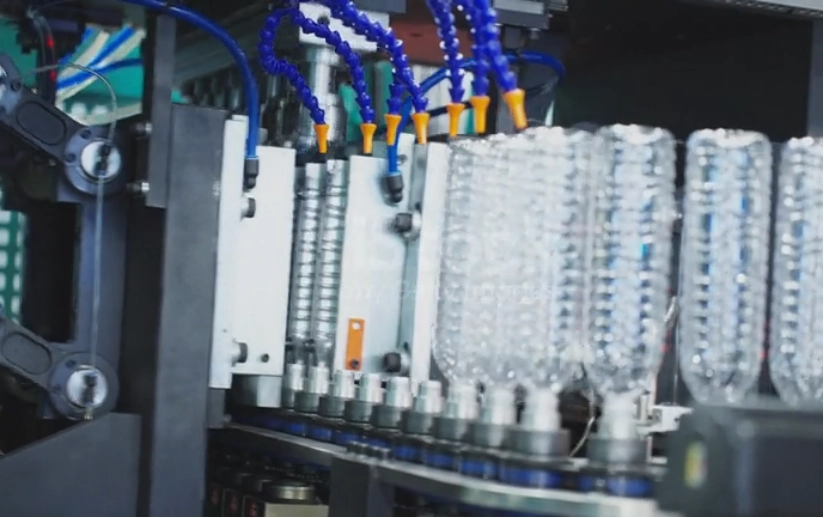
Consistency in the preform stage is the bedrock of a low scrap rate. If the preform is flawed, the final bottle doesn’t stand a chance. High-quality injection mold units ensure uniform wall thickness and gate quality, preventing downstream blowing failures. When a wall is even slightly off-center, the heat distribution during blowing becomes uneven, leading to thin spots that eventually burst.
Precise cooling channel design within the mold reduces thermal stress and crystallinity issues. If the cooling is uneven, the preform might “lock in” stresses that only reveal themselves as cracks during the high-pressure blow. Furthermore, regular maintenance of hot runner systems prevents material degradation and black spots. The features of advanced and reasonable hot runner design, independent temperature control for each cavity, uniform heating temperature and independent cooling system, shorten the production cycle of products. Neglecting the hot runner often results in charred material flaking off into the melt, which is a one-way ticket to the scrap bin.
Common Root Causes of High Scrap Rates in PET Manufacturing
Identifying why a line is throwing away 5% of its output requires looking at both the “software”—the resin—and the “hardware”—the molds.
Why Does Material Quality Impact the Final Blow Molding Result?
Material is often the first thing blamed but the last thing tested properly. Variations in IV (Intrinsic Viscosity) values lead to inconsistent stretch ratios and bottle bursts. If the IV is too low, the resin lacks the molecular “muscle” to stretch into a complex bottle shape. Excess moisture in the resin causes hydrolytic degradation, weakening the structural integrity of the bottle. You can see this in the form of hazy or brittle preforms. Also, the presence of regrind material must be carefully monitored to avoid contamination and color shifts. While using regrind saves money, too much of it changes the melting point and viscosity, making the process unpredictable.
Identifying Mechanical Wear in Blowing Molds
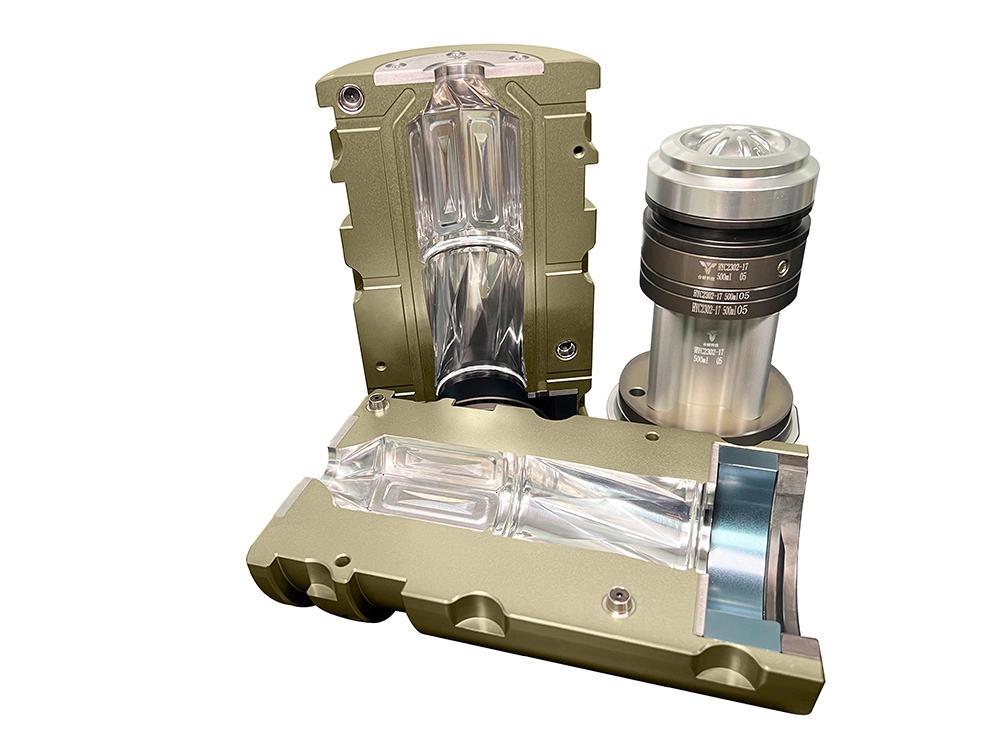
Even the best blowing mold will eventually succumb to the physics of high-speed production. Wear on the mold parting line creates visible seams and aesthetic defects that lead to rejection. It’s a subtle thing at first—a tiny flash—but it grows. Inefficient venting systems cause trapped air, resulting in incomplete bottle formation or “short shots.” If the air can’t get out, the plastic can’t get in. Misalignment between the stretch rod and the blowing mold cavity generates uneven base thickness. If the rod isn’t perfectly centered, it pushes more material to one side of the base, creating a “rocker” bottle that won’t stand straight on a conveyor.
Strategic Adjustments to the Blow Molding Process
Process control is where the daily battle against scrap is won or lost. It’s about managing energy and timing with extreme precision.
How Does Temperature Profiling Influence the Rejection Rate?
Temperature is everything in PET. Inaccurate oven heating profiles lead to “pearly” surfaces or whitening due to overstretching. This “pearl” look is actually the plastic micro-tearing because it was too cold to stretch. Balancing the infrared lamp intensity ensures the preform reaches the ideal glass transition temperature. It’s a delicate balance; too much heat and the preform sags; too little and it turns white. Seasonal ambient temperature changes require proactive adjustments to the cooling water setpoints. A factory in July needs a different cooling strategy than the same factory in January, even with climate control.
Enhancing Production Efficiency Through Mold Engineering and Maintenance
To push cycle times down without pushing scrap rates up, the engineering must be top-tier. The main molded parts are independent inserts, which are convenient for replacement and maintenance.
The Importance of Rapid Cooling and Cycle Time Management
Speed is the enemy of quality if the heat isn’t managed. Advanced copper alloy inserts in blowing molds accelerate heat dissipation for faster, stable production. Copper pulls heat away from the plastic much faster than stainless steel. Optimizing the pressure transition from low-pressure to high-pressure blowing reduces stress whitening. If you hit the preform with 40 bars of air too early, you shock the material. Systematic lubrication of moving mold parts prevents micro-stuttering that affects bottle symmetry. A tiny hitch in the mold opening or closing can vibrate the preform just enough to cause a defect.
Implementing Real-Time Quality Monitoring Systems
You cannot manage what you do not measure. Waiting for a human operator to spot a defect is a recipe for high scrap. Automated vision systems detect neck deformations and base defects before bottles reach the packaging stage. These cameras don’t blink and they don’t get tired. Pressure sensors within the blowing station provide data on leakage or blockage in real-time. If a valve is failing, the pressure curve will show it before the bottles start exploding. Analyzing scrap data patterns helps distinguish between machine-related errors and raw material inconsistencies. If the scrap is only coming from Cavity 4, it’s a mold issue. If it’s across all cavities, check your resin or your oven.
Partner with HEYAN TECHNOLOGY
HEYAN TECHNOLOGY has strong processing ability and excellent technical team. We deeply understand that advanced processing equipment, rich project experience, sophisticated processing techniques, the latest mold technology, a professional and responsible after-sales service system, and a rigorous quality management system are key to ensuring product quality. Customers will receive customized solutions covering host equipment, process applications, automation, auxiliary equipment, intelligent services, production environments, and more. Depending on our technical advantages and practical experiences over years, combined with advanced technology, R& D capability at home and abroad, our complete set of high-quality injection molds features reasonable overall structure design, high precision, stable operation, short products cycle time and low cost.
If you are looking to optimize your PET bottle production line, improve mold performance, or reduce rejection rates, contact us today to discuss a tailored solution for your project.
FAQ
Q: How often should I maintain my hot runner system?
A: It depends on the resin, but a deep clean every 500,000 cycles is a good starting point to prevent material degradation.
Q: Why are my bottles suddenly showing “pearl” whitening?
A: This usually means the preform is too cold during the stretch. Check your oven lamps or the ambient temperature in the shop.
Q: Can I use 100% regrind material?
A: It is technically possible but practically difficult. Most high-quality lines stay below 25% to maintain Intrinsic Viscosity (IV) stability.
Q: Does the mold brand matter for scrap rates?
A: Absolutely. The bottle blowing mold is matched with all types of world leading brands of high-speed rotary and linear blowing machine, such as SIDEL, KRONES, SIPA, SIG, ASB, etc. High-precision engineering reduces mechanical errors that lead to scrap.