

5 Warning Signs Your PET Mold Supplier Is Cutting Corners (2026 Alert)
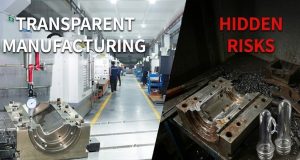
In the tough scene of 2026, the cost fight in the PET mold making field has grown harder than before. For a buyer boss, spotting an offer that is 30% below the usual rate is very tempting. But in the spot of fine build, “low” seldom comes free. Most times, the bill just moves to your make floor.
Many plant owners only find out they bought a bad mold after three months of work. By then, making has stopped because of water drips, stuck pins, or too high waste amounts.
To really get the main reasons for pet preform defects and remedies, you must begin by checking your mold seller’s grade rules. Often, the flaws blamed on the shot machine or the plastic stuff are really signs of a mold maker who saved cash by skipping steps. Here are the five bad signs you need to look for before you sign any deal.
1. The “Mystery Steel” Switch
The steel used for the core, cavity, and neck ring is the most costly stuff part of the mold. The usual pick for good PET molds is S136 steel (often from Assab or top Chinese matches), which is known for its firmness and no-rust strength.
The Warning Sign:
The seller says S136 steel, but their cost just covers the raw stuff bill. When you ask for the first steel plant paper or a firmness test note, they get unclear. Or they say they will send it “later.”
The Consequence:
Bad sellers may swap S136 for P20 or a weaker no-rust steel. Since these softer steels cannot hold the high lock push of PET shot, you will soon spot quick wear at the split line. This causes Flash (Burrs) on the preform neck or body. Also, softer steel marks easy. This ruins the top shine and clear look of your preforms even when they are fresh.
2. Simplified Cooling Design
Cooling time is key because it takes up about two-thirds of the full shot round. A strong mold counts on a hard inside plan with deep-cut water paths to pull heat out fast and even.
The Warning Sign:
While the mold plan might seem normal on the outside, the inside water paths show a different tale. A seller aiming to cut costs might lower the count of cooling loops. Or they skip separate cooling for the thread neck spot to save on costly deep-hole cutting.
The Consequence:
Bad cooling leads to uneven shrink and Crystallinity (Opacity/Haze), mostly at the gate or neck. To mend this, your workers will have to boost the cooling time. This slows the round from a gainful 12 seconds to a slow 18 seconds. Though you pay for the mold only once, you pay for this lost time each day.
3. Compromised Mold Base Rigidity
A multi-cavity PET mold is heavy. And it must hold hundreds of tons of clamp force. The mold base plates work as the base that keeps all together.
The Warning Sign:
To save on steel mass and ship costs, the seller uses slimmer mold plates. Or they take out needed hold posts between the plates. They think you will not see the change in mass.
The Consequence:
Under high shot push, a weak mold base will bend or curve a bit. This tiny change makes the cores move off-center from the holes. This results in Eccentricity. It means the preform wall is uneven. Thick on one side and thin on the other. This makes bottles break during blow.
To make sure size steadiness, big make lines need a strong multi-cavity injection mold built with added plates. These can hold big push without changing shape.
4. Budget Hot Runner Components
The hot runner system is the core of the mold. It controls the flow of melted plastic into each hole.
The Warning Sign:
The seller will not name the brand of the heat coils, heat feelers, or valve tubes. Instead, they use plain, no-name parts that lack exact heat control lines.
The Consequence:
Uneven heat control leads to High AA (Acetaldehyde) Levels, which can ruin the taste of water or drinks. Also, if the valve gate does not shut clean because of bad heat control or low-cost air tubes, making will face Stringing or high Gate Vestige (a sharp tail on the preform bottom). This can harm your blow molds later.
5. Skipping the “Wet Test”
Once the mold is made, it must go through a last check known as the trial run.
The Warning Sign:
The seller hurries to ship. And they only do a “Dry Cycle” (running the parts without plastic). Or a very short shot test of 10-20 shots. They might send shots of a few good samples. But they say no to giving a video of the mold running steady for an hour.
The Consequence:
Many heat balance troubles, such as water drips or valve pins sticking because of heat grow, only show after the mold hits its heat balance (usually after 2 hours of running). If the seller skips this full-load check, you become the tester. You find drips and faults on your own plant floor.
Conclusion: Value Engineering is the Answer
In the now market, guarding your gain edges means looking past the tag cost. A low mold that causes a 5% waste rate and 20% slower round times is in the end the most costly buy you can make.
The wise way is “Value Engineering”. Find a mix where cost saves come from speed and tech, not from taking out key stuff or skipping grade checks. If you are wondering how to choose PET mold maker in China, the secret is to audit their process for these five warning signs before you pay. By spotting these bad signs early, buyer teams can protect their make lines from costly stops.
The High-Precision Alternative in Foshan
For buyers looking for a mix between European work and Chinese worth, HEYAN Technology gives a fix based in build truth. Unlike all-around shops, HEYAN sticks only to high-precision PET molding. And it uses a strict check rule.
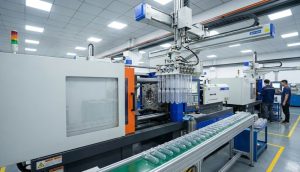
From giving real S136 steel papers to making sure better cooling plans, the firm makes sure every part of the mold adds to a lower Total Cost of Ownership. Before ship, every mold goes through a 4-hour steady load check to make sure it is ready for make.
FAQ: Spotting Quality Issues Before Delivery
Q1: How can a buyer verify if the mold is actually made of S136 steel?
A: The most trusty way is to ask for a hardness test report upon delivery. Hardened S136 steel typically reads between 48 and 52 HRC. If the reading is significantly lower (e.g., 30-35 HRC), it is likely P20 or unhardened steel. You should also request the original material certificate from the steel mill before machining begins.
Q2: Why does the mold weight matter?
A: The weight indicates the amount of steel used in the mold base. If a quote for a 48-cavity mold claims the weight is 20% lighter than the industry average, it suggests the supplier used thinner plates or removed support structures. This lack of mass reduces rigidity and leads to deformation under high clamping pressure.
Q3: Can poor mold cooling cause high Acetaldehyde (AA) levels?
A: Yes, it can. While AA levels are primarily related to resin quality and barrel temperature, poor mold cooling keeps the preform hot for too long, which degrades the material. However, the hot runner design plays a bigger role; “dead spots” in a cheap manifold allow plastic to sit and degrade, causing AA levels to spike.
Q4: What is the standard warranty for a high-quality PET mold?
A: A reputable supplier typically offers a warranty based on shots (e.g., 3 million shots) or time (e.g., 1 year), whichever comes first. Be wary of warranties that exclude “wear parts” without defining them, as some suppliers categorize essential core and cavity components as wear parts to avoid liability.
Q5: Is it normal for a supplier to charge extra for a “continuous run” test?
A: No. A continuous run (e.g., 2-4 hours) should be part of the standard Factory Acceptance Test (FAT). If a supplier asks for extra money just to prove the mold works continuously, it is a major red flag that they lack confidence in their own engineering.
Are you unsure about a current mold quote?
To verify technical specifications or discuss your production goals, please contact us directly for an engineering consultation.


