

Injection Moulding vs Blow Moulding: Which Is Right for Your PET Packaging Project?
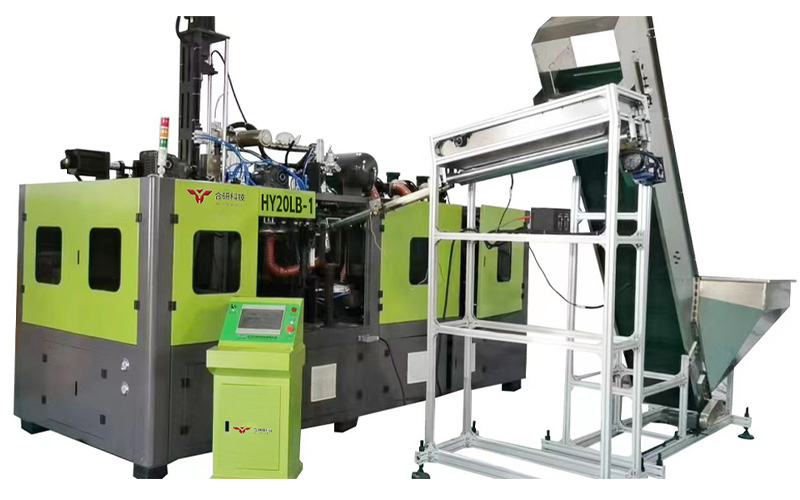
If you work on any PET packaging project, you quickly meet two core processes: injection moulding and blow moulding. One shapes the preform, the other shapes the final bottle. At first glance they can feel similar, but the way they treat the material, the moulds and the final part is quite different. If you want stable bottles and fewer surprises on the line, you need a clear view of where each process fits and how to choose the right moulding process for your next job.
What Injection Moulding Means in PET Packaging
Before you pick sides in the injection moulding vs blow moulding debate, it helps to look at what injection moulding for PET actually does in the chain. In most PET lines it does not make the finished bottle. It makes the preform that later gets reheated and blown. That role is more important than it looks on a layout drawing.
How Injection Moulding Works for PET Preforms
In a typical setup, PET preform production starts on an injection moulding machine for pet preform. Dry PET granules are fed into a barrel, melted, then injected under pressure into an injection mould for PET preform. Inside this tool, cooling channels and a controlled mould cooling system pull heat out of the plastic so the preform sets with the right shape and crystal level.
Here, preform geometry is king. The wall thickness, body length, neck support ring and thread all follow a design that links back to the target bottle. The L/T ratio, or length to thickness ratio, is especially important, because it influences how the material can stretch later in the blow mould. Neck finish accuracy and cavity consistency decide if caps seal well, if closures run smoothly and if every preform behaves the same in the oven.
You also need mould steel that can hold tight dimensions over many cycles, plus a mould structure that resists wear on moving parts. The injection stage sets your basic cycle time and your first pass at dimensional stability. Once this step is off, every later step has to fight it, often with higher energy and lower output.
When Injection Moulding Is the Better Choice
Injection moulding shines whenever you need solid parts or thick sections with high mechanical strength and tight dimensional stability. In PET packaging this includes preforms themselves, some caps, fitments or structural parts that connect to other components. If your part has detailed features, sharp edges or metal inserts, injection is usually the better route.
It also helps when you want very precise material distribution in the starting blank. A well designed preform gives the blow moulding stage room to fine tune wall thickness distribution instead of trying to fix a poor base. That is why so many successful projects spend real time on the preform design rather than treating it as a simple tube.
What Blow Moulding Means for PET Bottles
If injection is about building a stable starting shape, blow moulding for PET is about turning that small, heavy preform into a light, thin bottle that still holds up in transport and on the shelf. PET bottle blow moulding uses heat, air and controlled stretching to move material exactly where the bottle needs it.
The Blow Moulding Process for PET Bottles
In a standard line, preforms move through a heating zone where infrared lamps bring the material into the right temperature window. A stretch rod enters the preform and pulls it down to create axial stretch, while blowing pressure pushes the walls out into a blow mould for PET bottles. In a good setup, this combination of stretching and air pressure gives a repeatable stretch ratio and good clarity.
Inside the blow mould, the mould structure supports the shape, embossing and base design of the bottle. Cooling channels again play a quiet but critical role, pulling heat out fast enough to hit the target cycle time without stressing the material. If cooling is uneven, you see panel deformation, bent necks or tilted bases later in the warehouse.
When Blow Moulding Is the Better Choice
Whenever your product is a hollow, thin wall PET container, blow moulding is the natural choice. It works well for water bottles, CSD bottles, edible oil containers and many daily chemical bottles. If you want lightweight designs, complex grips or shaped shoulders, blow moulding can usually handle them as long as the preform supports the idea.
If your line needs high output and continuous running, a stable PET bottle blow moulding process is much easier to scale than trying to create complex hollow shapes by injection alone.
Key Differences Between Injection Moulding and Blow Moulding
Now that you have seen the basic roles, the deeper question is how injection moulding and blow moulding differ in practice. The gap is not only in part shape but also in tooling, process control and cost behaviour.
Solid vs Hollow Part Formation
Injection moulding vs blow moulding can almost be summed up as solid versus hollow. Injection moulding fills a closed cavity to create a mostly solid or thick-section part. Blow moulding starts from a preformed tube and uses air to create a hollow body around a core shape.
For PET packaging, it is very rare to make bottles with pure injection, because the wall thickness would be too high and the weight too large. Instead you pair an injection preform with a later blowing step.
Mould Structure, Cooling and Cycle Time Differences
Injection moulds tend to have more complex runner systems and higher clamp forces, while blow moulds focus more on venting, body shape and fast cooling. Both tools rely on a good mould cooling system, but the layout of cooling channels differs because the part geometry is so different.
In injection, cycle time is driven by how fast the thickest section can cool without warping. In blow moulding, cycle time is more a balance between body cooling and keeping the bottle stable when it leaves the mould. Cavity consistency matters in both cases. If one cavity runs hotter, flashes more or cools slower, your scrap pattern quickly shows it.
Material Distribution and Wall Thickness Control
Injection sets the base material distribution in the preform. Blow moulding then stretches that shell and finalises wall thickness distribution in the bottle. If you want good wall thickness control in the final part, you need both stages to work together. A poor preform shape forces the blow stage to work near its limits, which often shows up as thin shoulders or heavy bases.
Why PET Packaging Often Uses a Two-Step Process (Preform → Blow)
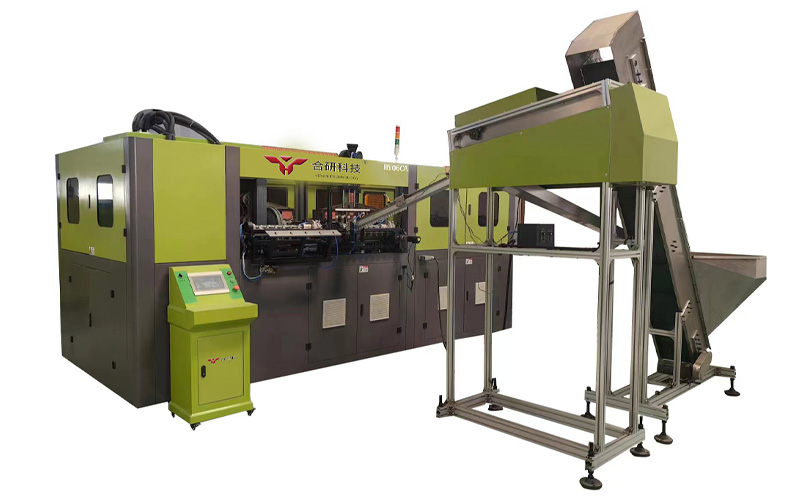
There is a reason so many plants use a two-step method based on injection stretch blow moulding (ISBM). It separates the stable creation of preforms from the flexible shaping of bottles, which is useful when you run different bottle designs from the same neck standard.
Engineering Benefits of the Two-Step Method
The two-step route gives you better control of neck finish accuracy, preform geometry and later blowing conditions. You can run PET preform production on a dedicated machine and then send preforms to one or more blow lines. That flexibility helps when orders shift or seasons change. The result is more stable dimensional stability across large volumes and more options in bottle design.
How Preform Quality Affects Blow Moulding Results
Preform quality drives preform-to-bottle compatibility. Weight, L/T ratio, gate design and surface condition all influence how the PET stretches in the blow mould. If the preform is too short, too thick or off-centre, you may need higher heating or more aggressive settings, which hurts bottle life and mechanical strength. A good preform lets the blow stage run inside a comfortable window instead of right at the edge.
Choosing the Right Process for Your PET Packaging Project
With all this in mind, you can look at your own PET packaging project and decide where each process fits. In many cases you do not pick only one. You decide how the two stages share the work.
When You Mainly Need Injection Moulding
If your focus is on supplying preforms or solid PET parts, you will invest more time in injection moulding for PET, the injection moulding machine for pet preform itself and the injection mould for PET preform. Your checks will centre on neck quality, cycle time and the long term behaviour of the tool steel.
When Your Project Requires Blow Moulding
If your main pain points are bottle weight, shape, label area, top load or pallet stability, your decisions will lean toward blow moulding for PET. You will look closely at the blow mould for PET bottles, heating zone control, stretch rod movement and blowing pressure, because these decide the final bottle performance.
When You Need a Combined Injection + Blow Solution
Most full bottle projects need both. You run injection stretch blow moulding (ISBM) or a similar chain so each step can play to its strengths. When both tools are designed with the same goals, you get cleaner wall thickness control, better wall thickness distribution and a bottle that behaves well from the filler to the shelf.
Conclusion
For PET packaging, injection moulding and blow moulding are not rivals. They are two halves of one process. One builds a precise preform with the right neck and base, the other turns that blank into a light, strong bottle. If you match preform design, mould structure, cooling channels and process settings with care, you get stable bottles and fewer long nights on the line.
Why HEYAN TECHNOLOGY Fits Long-Term PET Packaging Projects
HEYAN TECHNOLOGY, full name Foshan Heyan Precision Mold Technology Co., Ltd., focuses on PET packaging mould systems from the first layout drawing to the running line. The company develops and manufactures preform moulds, blow moulds and related tooling for caps and closures, with attention to tight neck tolerances and reliable long term running. Based in Foshan, it works inside a strong manufacturing cluster that supports high precision machining, heat treatment and metrology.
For PET projects that combine PET preform production with PET bottle blow moulding, HEYAN TECHNOLOGY offers engineering support across both stages. That includes advice on preform geometry, L/T ratio, cooling design and parting layout so the injection and blowing tools work as a matched pair. The result is practical help for buyers who want less scrap, more predictable cycle time and moulds that stay within spec through real factory conditions rather than only in a brochure.
FAQ
Q1: Can you make PET bottles only with injection moulding and skip blow moulding?
A: Technically you could make thick, heavy containers by injection, but they would not be competitive in weight or cost. For standard PET bottles you need a preform plus a blow moulding stage to get thin walls and good clarity.
Q2: When should you invest in a dedicated injection moulding machine for pet preform?
A: You should consider it when your volumes are high, neck standards are stable and you want control of PET preform production in house. That gives you better control of neck finish accuracy, preform geometry and supply security.
Q3: How do you know if your problem is in the preform or in the blow mould?
A: A quick way is to cut and measure several preforms and bottles from different cavities. If you see big variation already in the preform, the issue is upstream in injection. If preforms look good but bottles drift, then heating, stretch ratio, blowing pressure or the blow mould itself needs a closer look.
Q4: Does every PET packaging project need injection stretch blow moulding (ISBM)?
A: Not every project, but many do. ISBM is common when you want high clarity, light weight and strong bottles. Some niche products may use other routes, yet the two step preform then blow approach remains the standard for most PET beverage and food bottles.
Q5: What should you focus on first when comparing two suppliers for a PET packaging project?
A: Look at how clearly they talk about mould steel, cooling channels, mould structure, wall thickness control and preform-to-bottle compatibility. Suppliers who can explain these points in simple, concrete terms usually give you fewer surprises later on.