

PET Bottle Base Deformation: Mold and Process Causes
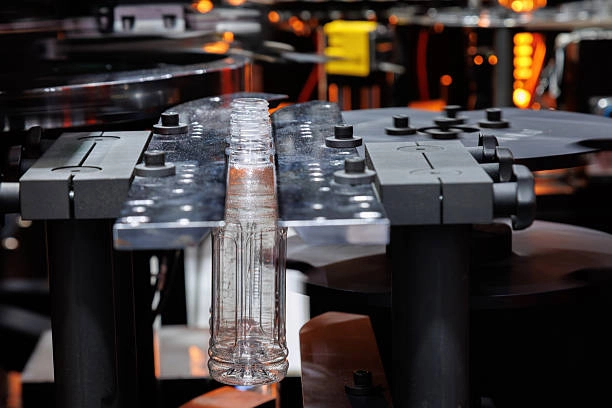
PET bottle base deformation rarely has one clean cause. A bottle rocks, so the mold is blamed. The base bulges after filling, so pressure is adjusted. Sometimes that works. Often it only moves the defect.
The base receives heavy stretching and concentrated cooling. Mold geometry, preform temperature, stretch rod position, and filling conditions all meet there. Diagnosis starts with the defect shape and cavity.
What Does PET Bottle Base Deformation Look Like?
Different defects leave different clues. Identify the pattern before changing settings.
Rocking or Unstable Bottles
A rocking bottle may have one high foot, an uneven contact ring, or a tilted base. On a conveyor, it may hesitate at transfers.
Place cavity marked samples on flat glass. A defect repeated in one cavity differs from random rocking.
Bulged or Collapsed Bottle Bases
A bulged base moves outward, sometimes until the gate touches the table. A collapsed base pulls inward after molding, filling, or storage.
A bottle that leaves the mold flat and bulges ten minutes later usually carries excessive residual heat.
Uneven Feet and Off Center Bases
Petaloid feet may differ in height, width, or wall thickness. The gate may sit away from center.
Typical causes include base mold misalignment, an off center stretch rod, uneven heating, or eccentric preform walls.
Mold Related Causes of PET Bottle Base Deformation
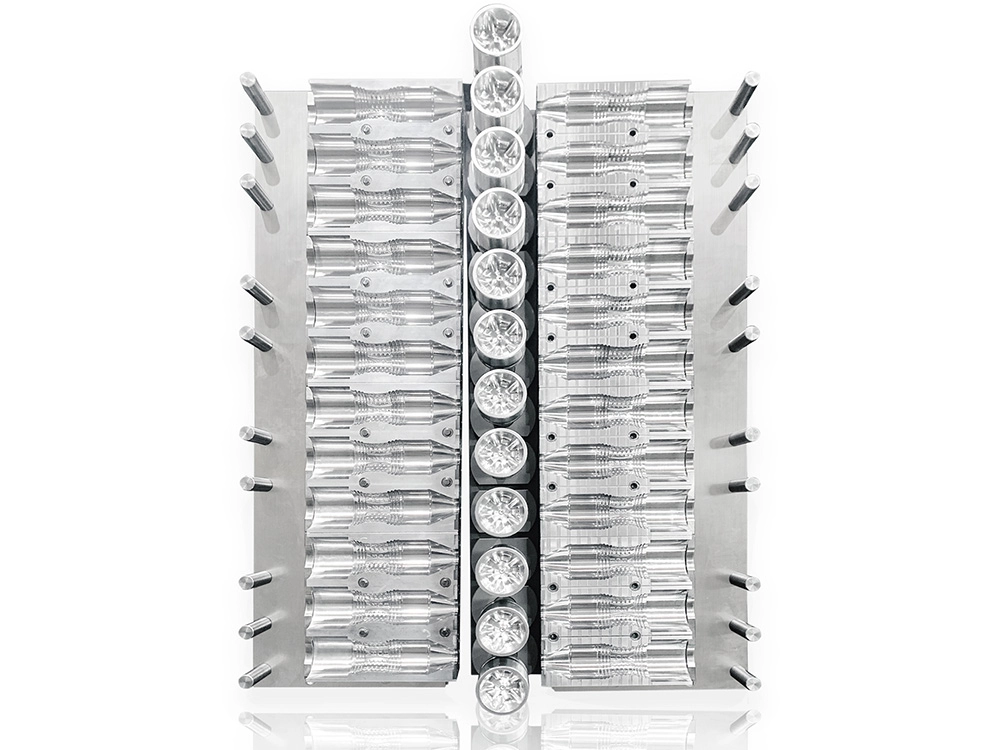
The base is less forgiving than the sidewall. Small geometry or cooling errors in a PET bottle blow mold become visible quickly.
Incorrect Base Mold Geometry
Base geometry must suit the application. Still water, carbonated beverages, and hot fill products do not need the same contact ring, center depth, or foot structure.
Narrow feet deform under load. Some lightweight designs leave little tolerance for temperature drift.
Base Mold Misalignment
The base mold must align with the cavity and stretch rod axis. Misalignment shifts material distribution and creates uneven feet or an off center gate.
On a six cavity machine, one cavity may rock every cycle while the other five look acceptable. Heating changes do nothing. Check alignment.
Poor Cooling Channel Design
The base needs fast, balanced heat removal. Restricted flow, scale, undersized connections, or poorly positioned channels can leave one area hotter.
Measure actual flow, not only inlet temperature. A cool hose proves little. Cooling-water capacity, piping layout, compressed-air stability, and machine cycle should therefore be evaluated as part of the complete PET bottle blowing system.
Worn or Damaged Mold Surfaces
Damage around the contact ring, foot edges, vents, or parting surfaces affects forming and release. Deposits alter heat transfer. Careless polishing can change the geometry.
Process Causes During Blow Molding
When the mold is mechanically sound, the process deserves attention. Several settings often act together.
Incorrect Preform Heating
Too much heat in the lower preform body allows excessive stretching. Feet become thin, the center becomes heavy, or the base shrinks after release.
Too little heat prevents full reproduction of the base detail. Check heating by zone, not only by average temperature.
Incorrect Stretch Rod Position
The stretch rod must be centered, stable, and correctly timed. Worn guides, rod bending, wrong final position, or uneven speed shift material.
A polished wear mark on one side of the rod tip can explain plenty.
Improper Pre-Blow and High Pressure Blowing Settings
Pre-blow timing controls where expansion begins. Too early, and the preform contacts the cavity before enough axial stretch. Too late, and material remains near the base.
High pressure must form the feet and contact ring. Insufficient duration leaves weak definition. Aggressive blowing can overstretch an already hot base.
Mold Temperature and Cycle Time
High mold temperature or short cooling time allows the base to move after ejection. The bottle may look acceptable at discharge and fail later.
Increasing cooling time is a useful test, not always the repair. A blocked circuit still needs cleaning.
Preform Conditions That Affect Bottle Base Stability
A defect appearing after a preform batch change should not trigger immediate mold modification.
Incorrect Preform Weight or Length
A lighter preform reduces material available for the feet and contact ring. Length also changes axial material distribution.
The same nominal weight does not guarantee the same behavior.
Uneven Preform Wall Thickness
An eccentric preform heats and stretches asymmetrically. One side reaches the base earlier or becomes thinner.
Cut several preforms and compare opposite walls. A small difference can become obvious in the base.
Poor Gate Quality
Large gate remnants, crystallization, off center gates, or local injection defects disturb base formation.
Inspect the preform before changing blow settings. A problem that follows a batch is rarely solved at the blowing machine.
Deformation After the Bottle Leaves the Mold
Some bases form correctly and deform later. Where the problem appears matters.
Insufficient Cooling Before Filling
A warm bottle can deform under conveyor pressure or rapid filling. Closely spaced bottles may push against each other while the PET remains soft.
This often appears after a speed increase while downstream handling remains unchanged.
Hot Fill Temperature and Internal Vacuum
Hot fill bottles develop vacuum as the product cools. Vacuum panels and bottle geometry should absorb that load. If they do not, the base may pull inward.
The bottle structure, filling temperature, capping, and cooling profile must be reviewed together.
Internal Pressure and Storage Conditions
Carbonated products load the base from inside. Warm storage raises pressure. Pallet load and transport vibration add stress.
A bottle may pass an empty check and fail days later in a warm warehouse.
How to Identify Whether the Mold or Process Is Responsible
Mark bottles by cavity and inspect them after molding, after 30 minutes, and after filling. Check base temperature, water flow, stretch rod alignment, heating profile, and preform batch.
A defect fixed to one cavity suggests local cooling, alignment, surface damage, or a mechanical component. A defect across all cavities points toward heating, pressure, cycle time, or material conditions.
Make one controlled change at a time.
Practical Solutions for PET Bottle Base Deformation
Clean and balance the base mold cooling circuit. Verify mold and stretch rod alignment. Inspect guides, base movement, vents, contact surfaces, and fittings.
Adjust lower heating zones in small steps. Review pre-blow timing and high pressure duration. Increase cooling time temporarily to test residual heat.
Compare preform batches, weights, lengths, gates, and wall thickness. Repair worn surfaces when the problem remains cavity specific.
Repeated parameter changes cannot correct unsuitable base geometry or a restricted cooling passage.
When Should the Base Mold Be Modified or Replaced?
Modification is justified when the same cavity repeatedly fails, cooling performance cannot be restored, or the bottle application changes.
Lightweighting may require a new base profile. Severe wear, damaged contact surfaces, and failure under pressure or top load tests are other signals.
Use cavity marked samples and wall thickness data before machining.
Conclusion
PET bottle base deformation may begin in the mold, preform, heating profile, stretch system, or filling line. HEYAN TECHNOLOGY develops customized PET bottle blow molds for water, carbonated beverages, edible oil, household chemicals, and other packaging applications. Machine data, bottle drawings, preform specifications, and cavity marked defect samples provide the best starting point for technical evaluation.
Send HEYAN TECHNOLOGY your machine data, bottle drawings, preform specifications, and cavity-marked defect samples to request a PET blow mold technical evaluation.
Frequently Asked Questions
Q: Why does a PET bottle rock after blow molding?
Rocking usually comes from uneven foot height, an irregular contact ring, off center stretching, or unbalanced base cooling. Compare cavity marked bottles and check whether the defect stays with one cavity.
Q: Can low cooling water flow deform the bottle base?
Yes. Restricted flow leaves the base too warm at ejection. The bottle may shrink, bulge, or lose foot definition several minutes later.
Q: Why is only one mold cavity producing deformed bottle bases?
A single cavity problem often points to a blocked cooling passage, base mold misalignment, local surface damage, worn guides, or an off center stretch rod.
Q: Can PET bottle base deformation be fixed by changing process settings?
Some cases improve through heating, pre-blow, rod, pressure, or cooling adjustments. Settings will not reliably correct damaged geometry, misalignment, severe wear, or inadequate cooling.