

The Complete Guide to PET Preform Moulds: Design, Production & Selection
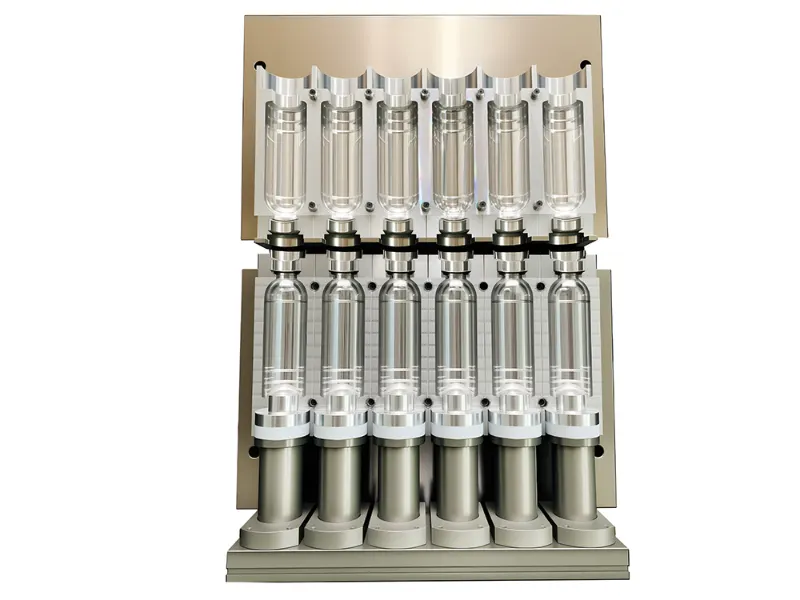
You care about cycle time, yield, and stable quality. The mould sets that baseline. If the preform is consistent at the neck, wall, and gate, downstream blowing runs smoother and scrap drops. This guide walks through the choices that matter in a PET preform mould—from design and cooling to maintenance and acceptance—so you can match tooling to your bottle program without guesswork.
In short, tight neck geometry, fast cooling, and clean ejection cut cycle time and scrap on any PET preform mould.
What Is a PET Preform Mould?
A PET preform mould is the injection tool that shapes the intermediate “preform” before stretch-blow. It defines neck finish, gate position, wall profile, and weight. When the tool holds tight geometry and sheds heat fast, you get shorter cycles and cleaner parts, which saves energy and polishing hours down the line.
Mould Types and Common Setups
You’ll see single-cavity tooling for trials and low volume, then 24–96 cavities for high-throughput lines. Runners can be hot or cold; valve gates reduce stringing and improve gate vestige on fast cycles. For a practical reference on layouts, review PET preform mould solutions to compare cavity configurations and gate options.
Key Design Parameters That Drive Performance
A good design turns machine tonnage, melt temperature, and cooling into repeatable parts. The details below affect clamp force, shrinkage, and downstream sealing. Start with the neck, since closures don’t forgive mistakes.
Neck Finish & Thread Standards
Neck finishes such as PCO 1881/1810, 30/25, and 38 mm govern cap fit and capping torque. You need concentric threads, clean tamper ring geometry, and crisp sealing lands. Small drifts at the neck create leaks that blowing cannot fix.
Gate & Nozzle Style
Valve gates help control drool, stringing, and gate blush. Open gates cost less and can work for non-carbonated SKUs. Gate diameter and cooling around the gate decide freeze time and mark quality.
Wall Thickness & Weight Control
Uniform walls reduce reheat variation and improve stretch ratios. Monitor preform weight, check cross-sections at shoulder and body, and track crystallinity. Stable weight keeps blowing pressure predictable.
Alignment & Tolerance
Guide pillars, bushings, and precise parting lines prevent flash and keep neck roundness tight. Small misalignments show up as tilt, non-round threads, or whitening near the support ledge.
Choosing the Right Cavity Number
Cavity count drives output and investment. You balance speed, cooling capacity, and SKU mix. More cavities push volume up, but changes get slower and manifolds get more complex.
Throughput vs Investment
Target a cavity number that your press, dryer, and chiller can truly support. Match shot weight to screw capacity. If chiller delta-T or flow is weak, cycle claims on paper won’t hold on the floor.
Changeover & SKU Strategy
If you run frequent flavor or neck changes, a mid-cavity tool with faster change parts can beat a mega-cavity tool that sits idle. Keep runner balance in mind when you plan future SKUs.
Hot Runner vs Cold Runner (Quick Comparison)
Hot runners cut scrap and help cycle time; cold runners lower capex and simplify maintenance. Your choice depends on resin cost, energy price, and staffing.
When to Choose Which
Pick hot runner for high-volume, tight gate cosmetics, and resin savings. Choose cold runner for short runs, pilot lines, or when you want simpler upkeep. If energy costs are high, the hot runner’s waste reduction often pays back faster.
Cooling Channel Design & Cycle Time
Cooling decides your real-world cycle more than any other variable. Water has to reach hot zones with the right flow and pressure; then return without big pressure drops.
Why Cooling Wins
Balanced cooling in core and cavity avoids ovality and haze. Spiral baffles, close-to-gate channels, and polished flow paths pull heat out where it matters. With better heat extraction, holding time and total cycle both fall.
Metrics to Watch
Track chiller capacity, inlet/outlet temperature, and flow per circuit. Watch ∆T across the tool; if it rises, scaling or blockages may be building. A small flow meter and a logbook pay for themselves.
Steel, Surface Treatment & Polishing
Steel grade and finish influence corrosion resistance, polish life, and ejection feel. You want hardness targets that resist wear without cracking, and cavity finishes that support clarity and easy release.
Material Choices and Heat Treatment
Corrosion-resistant steels for wet zones and hardened tool steels for wear zones are a common pairing. A controlled heat-treat window protects dimensional stability. Document hardness at key points.
Surface Finish and Clarity
Polish grades at the cavity wall affect gloss and release. Over-polishing can change dimensions; under-polishing can mark the part. Keep a finish spec per zone, not one number for the whole tool.
Ejection & Venting
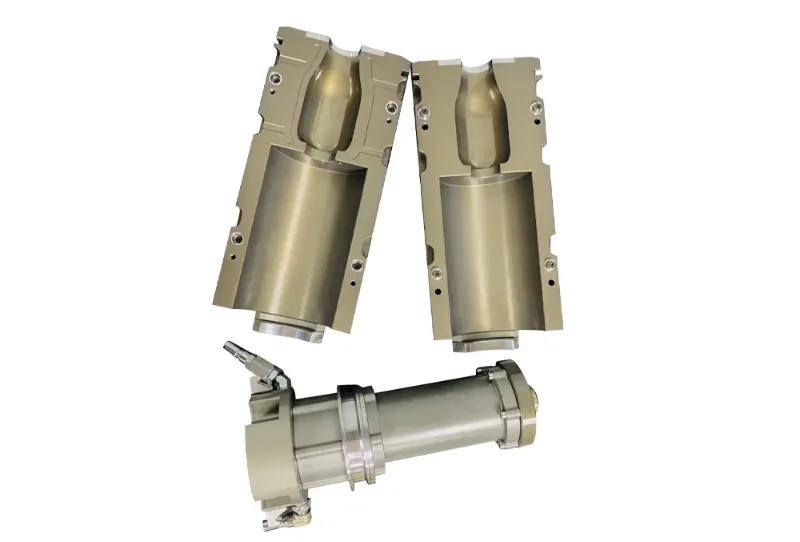
Parts must leave straight and smooth. Ejection that is too fast or uneven causes whitening or ovality. Poor venting creates burns and short shots.
Ejection Options
Stripper plates, sleeves, and air-assist each have a place. Match the method to part geometry. Time ejection so the gate is solid yet not brittle.
Venting Strategy
Micro-vents at high-pressure spots allow gas to escape without flashing. Inspect and clean vents on a schedule; fine dust will close them over time.
Typical Defects & Root Causes (Troubleshooting)
A quick map helps you move from symptom to action without long stops.
| Defect | Likely Cause | Quick Checks | Fix Actions |
|---|---|---|---|
| Flash at parting | Misalignment, low clamp | Bushing wear | Shim or repair; verify clamp force |
| Short shot | Poor venting, low melt | Gate freeze | Clean vents; raise melt/hold |
| Gate blush | Over-shear, hot gate | Gate temp | Reduce speed; adjust gate temp |
| Haze/whitening | Ejection, moisture | Ejector timing | Dry resin; tune ejection profile |
| Oval neck | Cooling imbalance | Core runout | Balance cooling; check core alignment |
Maintenance & Lifespan Planning
A mould lasts longer when you keep cooling paths clean, surfaces protected, and motion parts lubricated. You also catch drift early if you measure the right things.
-
Cooling circuit ∆T ↑ 3–5 °C → descale
-
Cycle time ↑ >5% vs. baseline → polish/ejector check
-
Neck ovality >0.05 mm → core alignment check
Routine Schedule
Daily wipe-downs, weekly lubrication, and monthly descaling keep cycles tight. Log neck dimensions, gate vestige height, and cycle time after each service.
Predictive Signals
Rising ∆T, longer hold times, and new polish marks point to scaling or wear. Build simple thresholds for action so the tool never surprises you in peak season. For additional layout ideas and service notes, look at preform mould manufacturing resources that show cooling and ejection schemes.
About Foshan Heyan Precision Mold Technology Co., Ltd.
Foshan Heyan Precision Mold Technology Co., Ltd. focuses on PET packaging tooling with a practical, floor-first mindset. You see it in the way cavity designs protect neck accuracy, in the cooling circuits that reach hot zones without starving flow, and in the attention to gate cosmetics at fast cycles. The product center covers preform, blow, and cap tooling with options for different neck finishes and output targets. What many buyers value is the mix of documentation and trial support: material traceability, heat-treat reports, QC sheets, and a clear acceptance plan. If you manage multi-SKU programs, short lead times on change parts and responsive service matter more than a nice brochure; the team keeps those items simple to schedule and easy to order. When you need a partner who speaks in cycle time, scrap rate, and uptime—not buzzwords—this is the type of shop that fits your day-to-day work.
Conclusion
Good tooling shortens cycles, stabilizes weight, and keeps necks true. You pick the right cavity number, match hot or cold runner to volume, invest in cooling, and keep vents and ejection clean. With a solid PM rhythm and clear acceptance checks, a PET preform mould becomes a quiet asset that pays you back every shift.
FAQ
Q1: Which factors should you check first when choosing a PET preform mould?
A: Start with neck finish accuracy, cooling design, and cavity count. Then confirm steel grade, gate style, and service terms. These items drive cycle time and consistency.
Q2: When does a hot runner make more sense than a cold runner?
A: When you run high volume or expensive resin. Hot runners cut waste, help cosmetics at the gate, and often reduce cycle time enough to offset the higher capex.
Q3: How can you reduce haze and whitening at ejection?
A: Adjust ejection timing, check moisture drying, and balance cooling. If whitening persists, review polish and ejector alignment.
Q4: What is a practical way to track mould health over time?
A: Log cycle time, ∆T on cooling circuits, gate vestige, and neck key dimensions after each service. Set thresholds that trigger cleaning or alignment checks.
Q5: How do you size cavity numbers for a new line?
A: Match shot weight to screw capacity, confirm chiller flow and delta-T, and consider SKU changes. A slightly lower cavity count with faster change parts can outperform a max-cavity layout that stalls during changeovers.