

How to Fix Haze in PET Bottle Blow Molding?
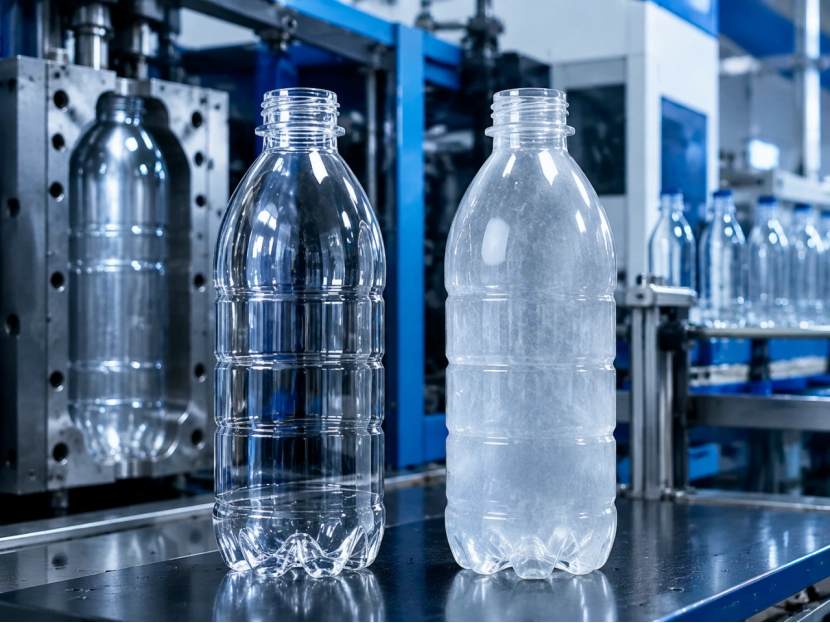
PET bottle makers often face haze. This unwanted cloudiness makes a clear container look dull. Haze comes from moisture in the resin, uneven heat during runs, or rough spots on the mold. To fix it you need good drying steps, steady control of the whole process, and well-made molds.
What Is Haze in PET Bottles
Haze happens when light scatters inside the bottle wall. This gives a milky look. It differs from color loss or scratches on the surface. Haze shows uneven crystal growth or tiny moisture pockets in the plastic. It hurts how nice the bottle looks. Buyers may think the drink inside is not pure, especially with water bottles. So haze serves as a main check for quality in PET work.
Common Causes of Haze During the Blow Molding Process
Haze can show up at different points in the run:
-
Improper resin drying: Water mixes with hot PET and breaks the chains. This makes acetaldehyde and small voids that scatter light.
-
Temperature inconsistency: Preforms heat unevenly in stretch blow molding. Some spots gain too much crystal and turn hazy.
-
Mold surface issues: A rough or dirty mold cavity blocks clear light passage.
-
Material contamination: Recycled PET or wrong additives bring in bits that stop light from moving straight.
Any one of these can cause light cloudiness. When they team up the defects get much worse in blow molding work.
Material Factors That Contribute to Haze
Resin quality decides how well the bottle lets light through. Even perfect runs cannot beat bad resin or too much water.
The Role of PET Resin Quality and Intrinsic Viscosity (IV)
Intrinsic viscosity sets how PET flows when melted and how its chains line up during stretch. Lower IV grades give less stress whitening yet may lose strength. Very high IV can leave some spots unmelted and cause local crystals. Both lead to haze. Poor or dirty resin makes things worse because bits act as seeds for crystals. Makers should pick clean bottle-grade resins for steady clear results.
The Importance of Proper Drying Conditions
Water ranks as a top cause of haze. PET picks up moisture from air. If it is not dried well before melt, hydrolysis shortens chains and cuts transparency. Normal drying runs at 160–175 °C for four to six hours until dew point hits –40 °C or lower.
To keep these settings:
-
Watch dryer heat and dew point all the time.
-
Stop re-wetting by closing dried pellets in sealed hoppers.
-
Swap desiccant when it loses power.
Process Parameters Affecting Optical Clarity
Good resin still needs right settings or haze forms in injection blow molding work.
Temperature Control in Injection Molding and Stretch Blow Molding
Heat must stay even from barrel to mold. Hot zones start crystals early. Cool zones stop full stretch. Hot runner swings also leave streaks or hazy bands on the bottle. Steady preform heat profiles give even stretch across the wall. Operators should skip extra heat because too much causes yellowing, a sign of resin harm rather than haze.
Stretch Ratio and Blow Pressure Adjustments
The stretch step sets how molecules line up and how clear the bottle ends up:
-
Axial stretch ratio lines up length ways.
-
Radial stretch ratio lines up around the hoop.
Uneven stretch makes wall thickness vary. Thicker parts turn hazy from extra crystals. Good blow pressure timing keeps expansion balanced and cuts internal stress that hurts optics.
Mold Design and Maintenance Considerations
The mold decides if the bottle comes out bright or cloudy.
Mold Surface Finish and Polishing Quality
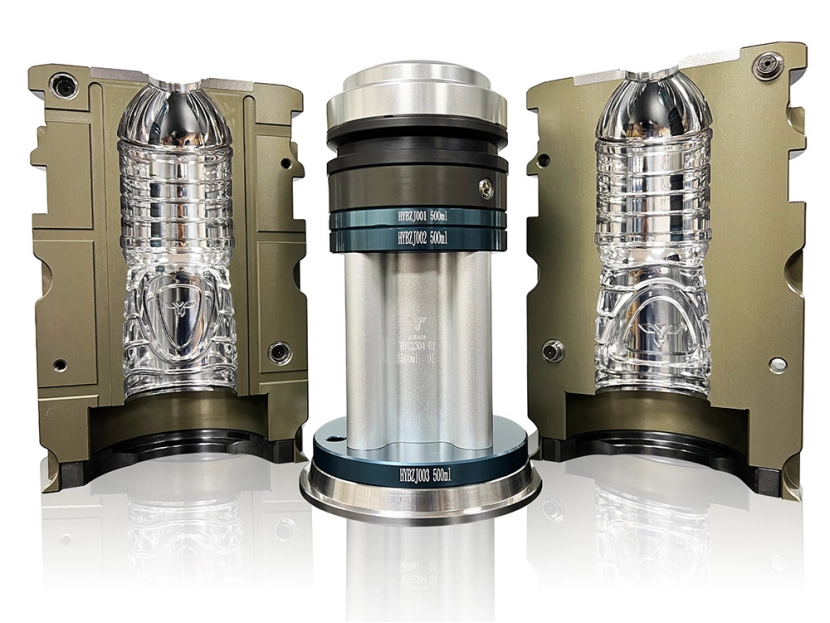
A smooth cavity lets light pass without trouble. Scratches, pits or buildup scatter light and show as dull patches. Fine polishing like diamond buffing reaches very low roughness for clear packs.
Regular care stops leftover lube or burnt bits from building up. Clean at set times to cut idle time while keeping clarity high.
Cooling System Efficiency in the Mold Design
Even cooling stops patchy crystals that cause haze spots. Cooling channels need to sit the same around every cavity so heat leaves evenly after blow. Thermal images show hot spots early so they do not hurt the look.
HEYAN TECHNOLOGY has strong processing ability and excellent technical team. Our precision molds are designed with optimized cooling channels ensuring stable operation and short cycle times—key attributes for maintaining optical consistency across large production runs.
Troubleshooting Guide for Haze Defects in PET Bottles
When haze shows up without warning a clear check list helps find the cause fast.
Step-by-Step Diagnostic Approach for Injection Blow Molding Troubleshooting
-
Check how the resin dryer works—look at heat stability and dew point.
-
Look at preform heat spread across oven zones with thermal maps.
-
Study the mold surface under a lens for scratches or dirt.
-
Watch blow pressure curves, stretch rod speed and cooling times.
-
View finished bottles under polarized light. Stress lines show uneven chain orientation tied to haze.
Corrective Actions Based on Identified Root Causes
Once you know the cause:
-
Change dryer settings or swap desiccant when moisture stays high.
-
Fix oven zones to remove hot spots.
-
Polish mold spots that show fine scratches.
-
Adjust blow timing to cut stress differences between areas.
These steps bring back clarity and help the process run steady for longer. They cut defects in blow molding work.
Preventive Measures for Long-Term Production Stability
Stopping haze costs less than fixing it later.
Implementing Quality Control Procedures in Blow Molding Operations
Regular checks keep gear in good shape:
-
Plan routine checks for dryers, molds, heaters and sensors.
-
Use inline tools to track humidity, air pressure and temperature swings during runs.
-
Train staff to spot early haze with simple visual guides before waste builds up.
Such steps support steady output across shifts and machines.
Leveraging HEYAN TECHNOLOGY’s Precision Mold Solutions for Improved Clarity Control
Our precision-engineered molds feature advanced cooling designs compatible with leading rotary systems like SIDEL or KRONES lines used worldwide for beverage packaging. By combining customized mold geometry with automated monitoring systems, manufacturers achieve tighter process control over heat distribution—directly minimizing haze risk at scale.
The products quality is ensured by our advanced processing equipment, rich projects experiences, perfect machining technology, the latest mold technology, professional and responsible after-sales service system, and strict quality management system. This integrated approach allows producers not only to fix current issues but also sustain clarity performance over years of continuous operation through tailored optimization support from experienced engineers.
FAQs
Q1: What causes white cloudiness inside PET bottles after molding?
Usually trapped moisture reacts with molten PET. This leads to hydrolysis that forms micro-bubbles and white haze inside the walls.
Q2: How can I check if my dryer setup is causing haze?
Keep dew point below –40 °C. If readings stay above this limit, the desiccant may be full of water or airflow may be weak.
Q3: Does recycled PET always increase haze risk?
Not always. But uneven melt flow or bits from earlier use often bring optical faults unless filtered well.
Q4: Can uneven cooling create partial transparency differences?
Yes. Non-uniform cooling sets some areas faster. This raises local crystals that scatter light unevenly on the bottle.
Q5: How often should molds be polished to maintain clarity?
For daily clear bottle runs, polish every few weeks or sooner if dull spots appear on inspection.