

Tethered Cap Mold Guide for EU Beverage Packaging in 2026
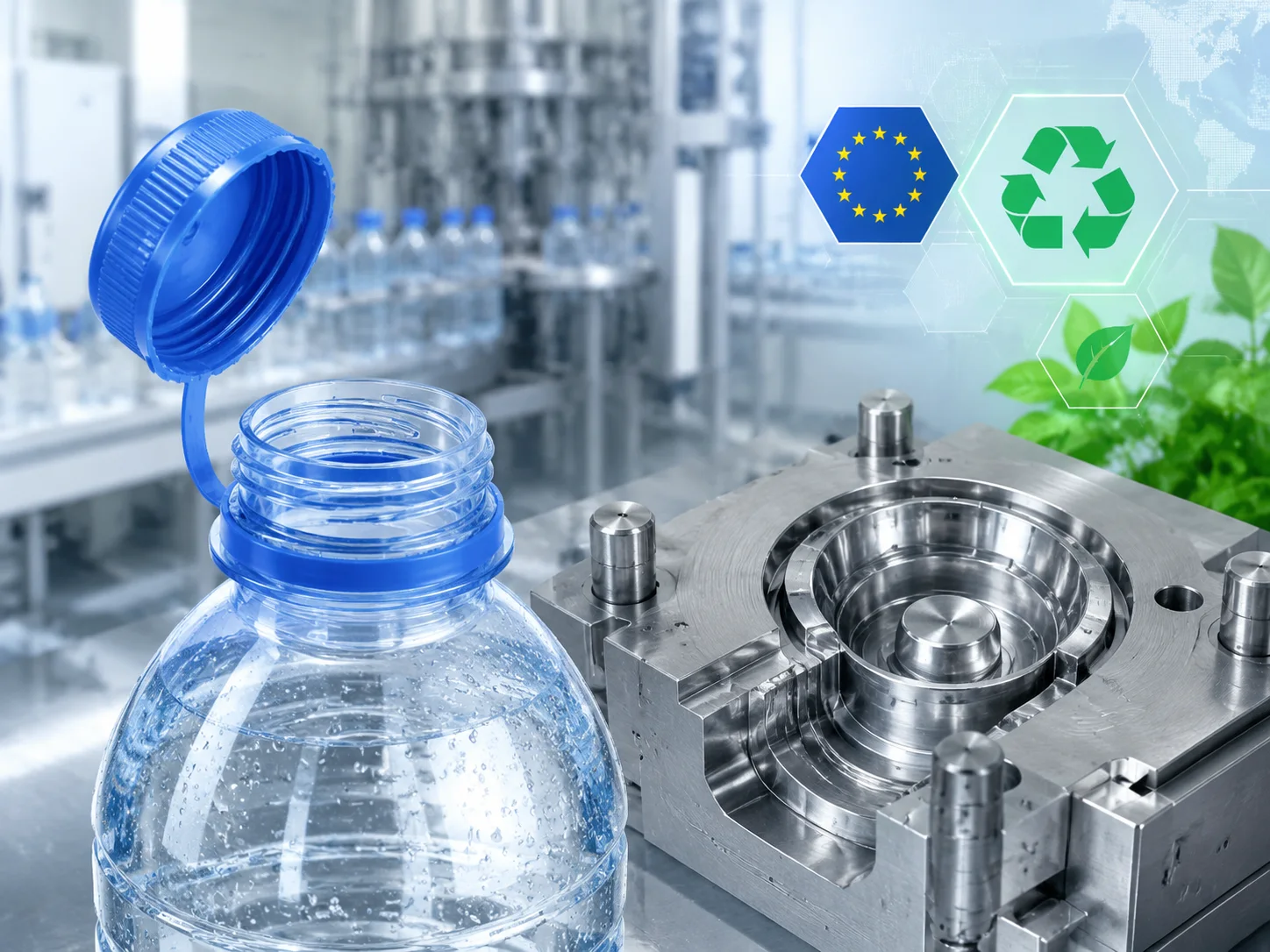
The European Union’s Single-Use Plastics Directive (SUPD) has set clear targets to cut plastic pollution across member states. By 2026 every bottle under three liters sold in Europe must have a cap that stays attached after opening.
The SUPD tries to cut plastic leakage into the environment. It does this by making sure caps stay connected to bottles during use and after. This design stops small plastic parts from being thrown away on their own. It helps collection rates and makes recycling work better.
The directive’s wider goal has two parts. It cuts single-use plastic waste. It also makes packaging materials like PET and HDPE easier to recycle. In real use it pushes manufacturers to pick joined green plans instead of single product changes.
Impact on Beverage Packaging Manufacturers
The rule covers all beverage packaging under three liters. This includes carbonated soft drinks in PET bottles and dairy products in HDPE containers. For packaging manufacturers it means reworking closure systems from the start.
Design, production, and assembly steps all feel the effect. Mold manufacturers must change tooling systems for new hinge parts. Bottlers need capping machines that work well with tethered closures. The rule also drives new ideas. Companies look at advanced cap mold shapes that keep use easy while holding the cap secure.
Technical Requirements for Tethered Cap Designs
To meet EU standards tethered caps must stay attached. They must also work well through the whole life of the product.
Structural Design Considerations for Tethered Caps
A compliant cap design keeps the closure fixed even after many opens and reseals. The hinge or tether must let the cap move smoothly. It should not hurt pouring ease or the seal when closed again.
Material choice matters a lot here. Polypropylene (PP) gives the right flex for living hinges. High-density polyethylene (HDPE) gives strength for bigger closures. The mix of these materials decides how well the cap handles stress from opening while still recycling well with the bottle.
Compliance Standards and Testing Procedures
EN standards set mechanical checks like torque resistance, pull-off strength, and hinge life. Testing checks user comfort and keeps attachment performance after many uses.
Manufacturers must check mold precision with steady size accuracy tests. Any small error might cause bad seals or cap loss. Advanced tools like coordinate measuring machines (CMM) help confirm mold cavity fit at micron-level accuracy.
Cap Mold Engineering for Tethered Closures
Building a good tethered cap mold system needs skill in design and how materials act during molding.
Key Features of a Tethered Cap Mold System
A solid cap mold uses hinge-forming inserts. These shape strong tethers without extra bits or weak spots. Even wall thickness keeps the seal tight once the cap goes on the bottle.
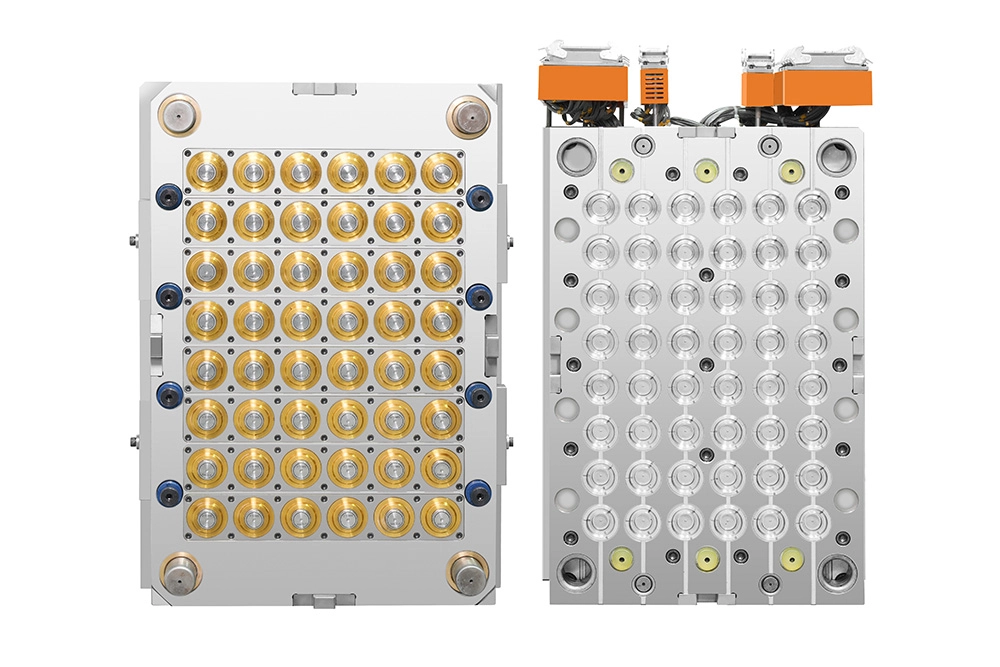
Cooling channels sit in smart spots inside the mold base. They cut cycle time and stop warpage. This matters in big production lines that turn out millions of closures each day.
Material Compatibility in Mold Design
Different polymers act in their own way under heat and pressure. PET preforms need molds with high heat move materials like beryllium copper inserts. These help fast cooling and steady size. PP or HDPE caps need extra room for more shrink during cooling.
Surface finish counts too. Polished cavity surfaces help caps come out clean. They also make the look better by cutting gate marks or rubs on the finished caps.
Advanced Mold Manufacturing Techniques at HEYAN TECHNOLOGY
Modern methods such as CNC machining and EDM let manufacturers shape complex hinge forms inside multi-cavity molds. Multi-cavity hot runner systems raise output by keeping melt flow even across all cavities. This keeps wall thickness steady in tethered designs.
Modular mold build lets manufacturers switch fast between neck types or tether styles. Producers can adjust to new bottle specs quicker without full new tools.
Integration of Tethered Cap Molds into Beverage Production Lines
Moving old plants to tethered closures needs both machine upgrades and work flow changes.
Adapting Existing Production Lines for New Cap Standards
Many bottling plants can update current capping machines with new chucks or grippers made for tethered caps. Some changes may still need new preform neck shapes to fit the fresh closure threads or tamper bands.
Automation grows in this area. Robotic handling cuts hand work during assembly or checks. It gives better consistency and lowers labor costs.
Quality Control Measures During Production
Keeping quality in big runs needs live monitoring systems. In-line vision checks catch faults like weak hinges or flash right after molding. Size tools confirm cap fit before the batch ships to bottlers. This makes sure every group meets EU attachment rules.
Preventive maintenance plans matter just as much. Cleaning cooling channels and resetting alignment pins make molds last longer and cut downtime.
Sustainability Benefits of Tethered Cap Solutions
Beyond rule compliance tethered caps bring real green gains that match Europe’s green plans.
Enhancing Recycling Efficiency Through Attached Closures
When caps stay on during throw-away they get collected with the bottles more often. They do not get lost in sorting. This lifts recycling yields and cuts dirt from loose parts in waste flows.
Keeping closures in one material stream, usually PET or HDPE, makes the recycle step simpler and cheaper. It backs circular economy ideas that EU rules push.
Reducing Carbon Footprint Through Mold Optimization
Engineering gains also help green targets in small ways:
| Optimization Strategy | Environmental Benefit |
| Lightweighting closure geometry | Less polymer used per unit |
| Efficient cooling systems | Lower energy consumption per cycle |
| Long-life molds | Reduced tooling replacement waste |
These added gains lower total carbon output tied to beverage packaging over time.
Strategic Opportunities for Beverage Brands and Mold Suppliers in 2026
As rule dates near both brands and suppliers see fresh chances from new ideas rather than just rule pressure.
Market Trends Driven by Regulatory Compliance
Demand across Europe is rising fast for approved tethered closure solutions that fit many bottle types. These cover water, juice, and dairy areas. Work between packaging designers, bottlers, resin suppliers, and mold engineers will set who wins in the market.
New trends add tamper-evident parts inside tethers. This step builds buyer trust and meets safety needs at the same time.
How HEYAN TECHNOLOGY Supports EU Packaging Transition
HEYAN TECHNOLOGY gives full manufacturing systems that include preform molds, cap molds, and blow molding equipment made for EU rule lines. Its modular tooling design lets clients set tether lengths or hinge styles to brand needs without breaking regulator rules.
Steady R&D spend keeps the work in line with today’s SUPD needs and future green marks expected past 2026 as recycle systems grow in Europe.
FAQs
Q1: What does “tethered cap” mean under EU law?
It refers to a bottle closure designed so that it remains attached to the container even after opening.
Q2: When do beverage producers need full compliance?
All products placed on the EU market must comply by July 2024, with complete adaptation expected by 2026.
Q3: Which materials are commonly used in tethered caps?
PP, HDPE, and sometimes PET depending on bottle type and desired flexibility of the hinge.
Q4: How do manufacturers test compliance?
They follow EN standards measuring torque strength, durability cycles, and attachment integrity through mechanical testing equipment.
Q5: Why are tethered caps better for recycling?
Because they prevent loose caps from entering waste streams separately, improving collection efficiency and reducing contamination during recycling processes.