

5 Liter PET Bottle Design: Preform Weight, Handle Integration, Blow Pressure and Top Load
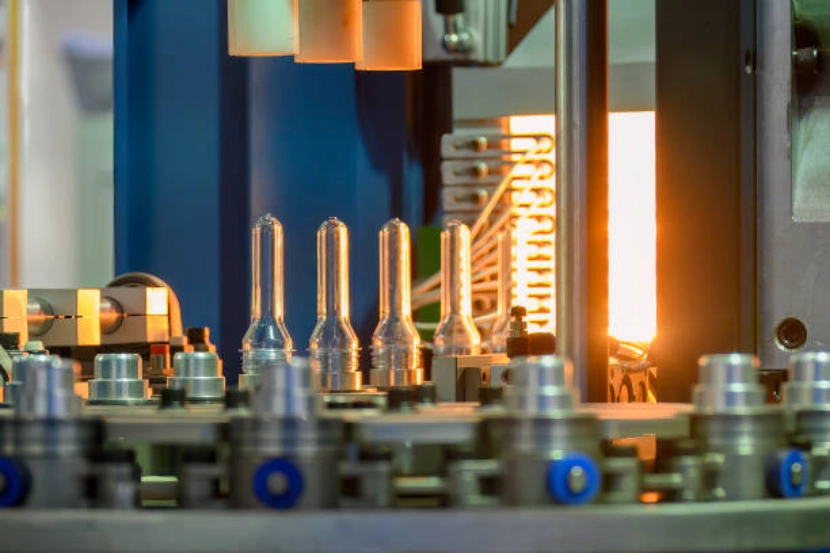
A 5 liter PET bottle looks simple until it is filled, lifted, stacked, and transported. Then design errors become obvious: a soft shoulder, an uncomfortable handle, a rocking base, or excess resin.
The preform, bottle geometry, blowing process, and top-load target must work as one system.
What Performance Requirements Should Be Defined Before Designing a 5 Liter PET Bottle?
The design brief should describe real use, not only nominal capacity. A 5L water bottle and a 5L edible-oil bottle carry the same volume, but oil is heavier and poured more often. Household chemicals add sealing concerns.
Important inputs:
- Product density
- Neck finish, cap, and opening size
- Bottle dimensions
- Handle type and pouring direction
- Available blowing machine and mold space
A wider label panel may reduce stiffness. A larger neck can change heating behavior. These choices are connected.
How Should the Preform Weight and Geometry Be Selected?
Preform weight is only part of the specification. Two equal-weight preforms can produce different bottles when their length and wall profile differ.
Why Is There No Universal Preform Weight for Every 5L Bottle?
Capacity alone does not set preform weight. Bottle height, body width, base design, handle structure, product density, and mechanical targets all matter.
A short, wide bottle needs different material distribution from a tall, narrow one. Adding grams without correcting geometry often creates a heavy base and a weak shoulder. The bottle costs more but performs no better.
rPET may also narrow the process window because reheating and stretch behavior can vary.
How Do Stretch Ratios Affect Material Distribution?
The preform needs suitable axial and hoop stretch while feeding material into the shoulder, grip area, and base.
Poor ratios appear as cloudy zones, thin shoulders, thick feet, pearlescence, or unstable cavity-to-cavity thickness. On handled bottles, the weak point is often beside the grip transition.
A good preform simply blows consistently.
How Should the Final Preform Specification Be Validated?
Use bottle trials, not calculations alone. Check wall thickness at the neck transition, shoulder, handle zone, label panel, base heel, and feet.
Drop and top-load tests should cover several cavities. One good sample proves little. Run long enough to reveal heating drift.
Which Handle Integration Method Is Best for a 5 Liter PET Bottle?
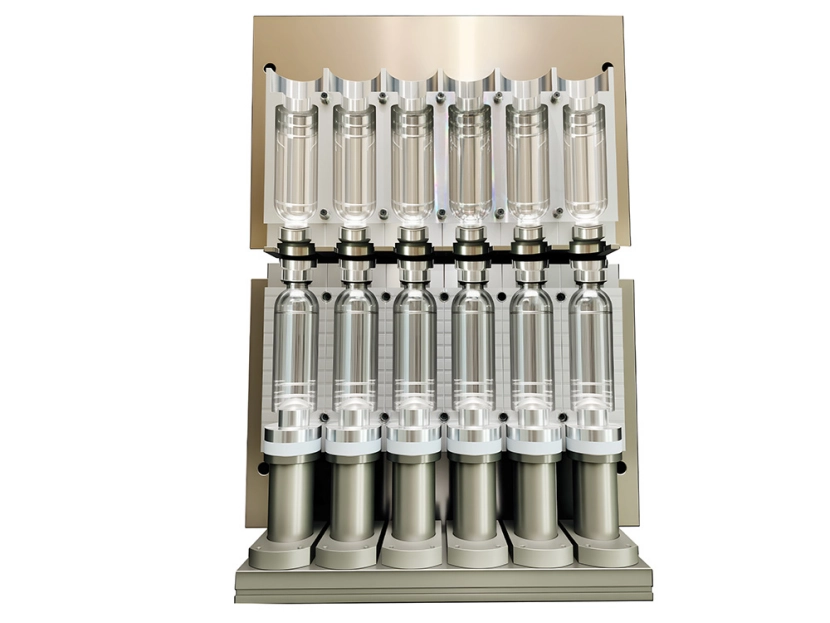
Handle design affects comfort, balance, mold complexity, and line layout.
What Handle Options Are Available?
|
Handle option |
Main advantage |
Main limitation |
|
Neck-mounted or snap-on |
Simple bottle body |
Separate component |
|
Inserted side handle |
Strong grip |
Added equipment |
|
Recessed grip |
Single-material package |
Limited grip depth |
|
Integrated-handle design |
Distinctive appearance |
Tight process window |
For many 5L bottles, a separate handle remains the safer production choice. Integrated concepts need tighter control of material distribution and cooling.
Which Bottle Areas Need Extra Attention Around the Handle?
The shoulder-to-grip transition is critical. Sharp section changes create stress and make wall distribution harder to control.
Check finger clearance with a full bottle. A handle that feels acceptable empty may become uncomfortable above 5 kilograms. Poor balance also twists the wrist and exposes sharp edges.
Deep recesses also require good venting and cooling.
How Should Blow Pressure and Heating Be Adjusted for a 5L Bottle?
Large containers react strongly to heating imbalance. A small temperature shift can move material noticeably.
How Do Pre-Blow Settings Influence Wall Thickness?
Pre-blow timing controls where the expanding bubble contacts the mold.
Starting too early may keep material high and leave the lower body thin. Starting too late may weaken the shoulder or handle region. Stretch-rod speed, preform temperature, timing, and pressure must be adjusted together.
Changing lamp power alone sometimes fixes a defect. Just as often, it moves the defect elsewhere.
How Should Final Blow Pressure Be Determined?
Final pressure must form ribs, corners, the base, and grip details cleanly. More pressure is not automatically better.
Excess pressure increases air use and can expose poor venting or base stress. Low pressure leaves soft panels and incomplete detail. The useful target is a stable pressure window that works across normal temperature and cavity variation.
How Can Top-Load Strength Be Improved Without Adding Excess PET?
Top load is mainly a geometry problem supported by correct material distribution. Resin weight helps only when the extra material reaches the right place.
Which Bottle Features Improve Top-Load Performance?
Smooth shoulder transitions, controlled panel depth, circumferential ribs, and a stable base ring usually provide more value than random wall thickening.
The shoulder carries much of the vertical load. A flat or thin shoulder can buckle early, especially when interrupted by a handle feature. Large flat label panels may also oil-can under compression.
A small rib in the correct position can outperform several extra grams.
How Should Top Load Be Tested?
Test empty bottles, filled bottles, and bottles stored at expected warehouse temperatures.
Check peak load, deformation, recovery, cavity variation, and bottom-layer behavior in pallet stacks. A bottle may pass empty and deform after warm storage.
How Should Preform Weight, Handle Design, Blow Pressure and Top Load Be Validated Together?
Development works as a loop: set performance targets, select an initial preform, run trials, map wall thickness, and test handle strength, drops, and top load.
A shoulder change may improve compression strength but reduce handle clearance. Lower preform weight may narrow the process window. Higher pre-blow pressure may fix one thin zone and create another.
The final design must tolerate normal production variation, not only ideal trial conditions.
What Information Should Be Given to a PET Bottle Mold and Line Supplier?
Provide the bottle drawing or sample, nominal and overflow capacity, product type, filling temperature, neck finish, cap details, target weight, handle concept, required output, machine model, and test standards.
Also define the scope: blow mold only, or a complete system including preform mold, cap mold, blower, injection equipment, air, cooling, filling interface, and downstream handling.
Incomplete data creates expensive assumptions.
Conclusion: Balance Material Efficiency with Reliable Bottle Performance
A good 5L PET bottle should feel uneventful. It stands flat, pours cleanly, survives stacking, and runs without constant operator correction.
That result comes from coordinated work across the preform, blow mold, handle, and process settings. HEYAN TECHNOLOGY supplies customized molds and complete PET bottle production systems for projects requiring those elements to work together.
FAQ
Q: What is a typical preform weight for a 5 liter PET bottle?
There is no dependable universal value. Bottle geometry, product density, handle design, top-load target, and stretch ratio determine the practical range.
Q: Can a 5L PET bottle use an integrated handle?
Yes, but integrated designs require tighter control of wall distribution, venting, cooling, and process settings. Separate handles are often easier to run at high output.
Q: Does higher blow pressure improve top load?
Not directly. Top load depends mainly on geometry and material distribution. Higher pressure cannot correct a weak shoulder or poor preform design.
Q: Which tests are required before mass production?
Wall-thickness mapping, drop testing, handle testing, top-load testing, and an extended production trial should be reviewed together.