

Is Your PET Bottle Ready for 2030 Recyclability Requirements? A Mold Design Checklist
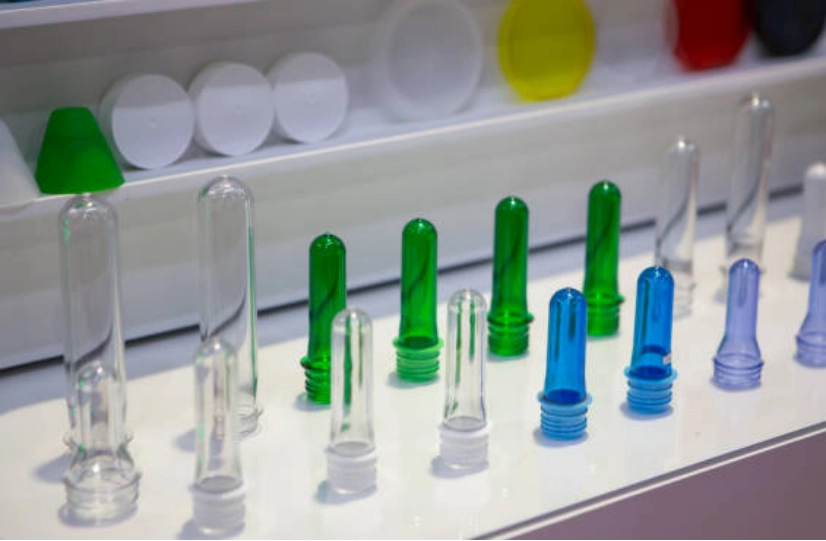
A PET bottle can look recyclable and still create trouble at the sorting or washing stage. Clear resin alone does not make a package circular. The preform, bottle geometry, closure, label and decoration all affect the result.
These decisions need to be made before the production mold is released. Changes become slower—and much more expensive—after steel has been cut.
What Do the 2030 Recyclability Requirements Mean for PET Bottles?
The EU Packaging and Packaging Waste Regulation requires packaging placed on the EU market to become recyclable by 2030.
For bottle producers, this means more than proving that PET can technically be recycled. The complete package must work with real collection, sorting and recycling systems.
Recyclability and recycled content are related but different. A bottle containing rPET may still perform poorly in recycling if it uses an incompatible sleeve, dark pigment or difficult adhesive. Meanwhile, a recyclable clear bottle may contain little recycled material.
Which PET Bottle Design Choices Have the Greatest Impact on Recyclability?
Some design features cause more problems than others.
Bottle Body, Color and Additives
Clear PET remains the safest choice for most bottle-to-bottle recycling streams. Light blue may also be accepted in some markets.
Material reduction needs care. The mold should create a controlled material distribution, not merely a thinner bottle. Ribs, panels and base geometry can restore strength without adding unnecessary resin.
Closures, Labels and Adhesives
A full body sleeve can hide the PET from sorting equipment. A label that does not release during washing may contaminate recovered flakes. Heavy ink coverage, metallic decoration and mixed material components create similar concerns.
Closure density and separation behavior also matter. PP and HDPE closures are widely used because they can be separated from PET during conventional recycling processes.
|
Design element |
Lower risk approach |
Potential recycling concern |
|
Bottle color |
Clear or approved light color |
Dark or opaque pigment |
|
Label |
Limited coverage and removable |
Full body, non-separable sleeve |
|
Decoration |
Small embossed branding |
Metallic or mixed material decoration |
How Should Preform, Blow and Cap Molds Be Designed for Recyclability?
Recyclability starts with packaging design, but mold quality decides whether that design can be repeated across thousands—or millions—of parts. The preform, blow mold and cap mold must be treated as one connected system.
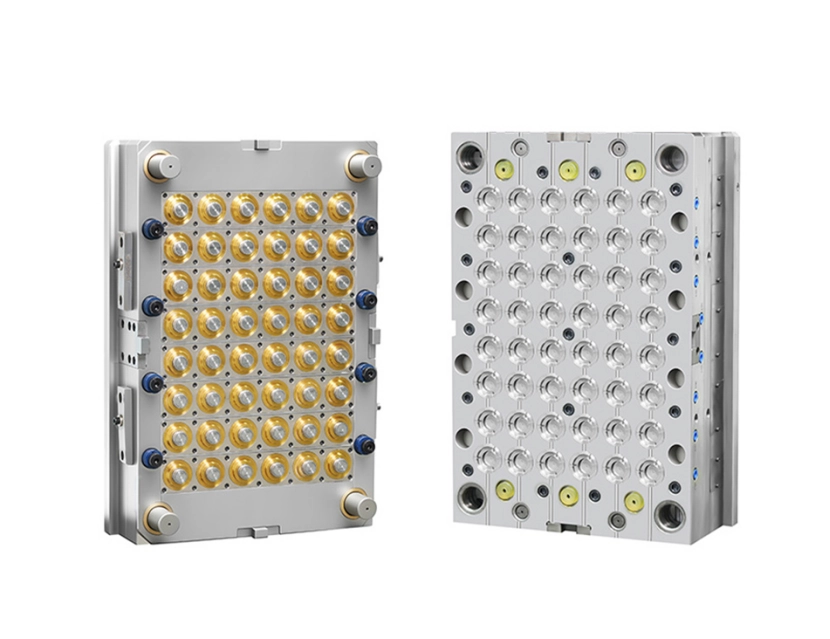
PET Preform Mold Considerations
The preform establishes bottle weight, neck dimensions and much of the final wall distribution. Small cavity-to-cavity variations become much larger after reheating and stretching.
A high cavity mold needs balanced filling, stable cooling and consistent gate quality. One cavity running hotter than the others may produce a preform that looks acceptable but blows into a bottle with a weak base or thin shoulder.
The intended rPET ratio should be known before mold trials. Drying requirements, intrinsic viscosity and color variation influence process stability. Hot runner temperature control and cooling balance become especially important as recycled content increases.
The neck finish should also match the selected closure standard. Changing it later can affect the preform mold, cap mold, blow machine handling parts and capping equipment.
Blow Mold Considerations
The blow mold must protect bottle performance while supporting lightweighting. Base geometry, ribs and transition areas usually offer more useful optimization than simply thinning the entire wall.
Material distribution should be checked at the shoulder, label panel, grip area and base. A common warning sign is a bottle that passes a static top load test but develops base deformation after filling or storage. The laboratory result was not wrong; the test conditions were incomplete.
Cooling and venting also influence repeatability. Uneven cooling can produce local stress, haze or dimensional variation. Good venting helps the bottle reproduce fine details without requiring excessive blowing pressure.
Label areas and embossed features should remain compatible with sorting and label removal. Large decorative structures may also make lightweighting harder than expected.
Cap Mold Considerations
A recyclable closure still has to seal reliably. Leakage creates far more waste than a small reduction in cap weight can save.
Thread geometry, tamper evident bridges and sealing surfaces must match the bottle neck precisely. Opening torque should remain consistent across cavities and throughout long production runs.
For markets requiring tethered caps, the hinge and bridge design must survive opening, drinking and reclosing without interfering with capping equipment. A tethered cap conversion may require more than a new cap insert. Neck finish, cap orientation and downstream handling should all be reviewed.
How Can Manufacturers Validate a Bottle Design Before Cutting Production Tooling?
Validation should begin with a complete packaging bill of materials: bottle resin, colorant, cap, liner, label, adhesive and decoration. Check the design against recognized guidance such as the APR Design Guide or the relevant European PET Bottle Platform protocols.
Prototype bottles should then be tested for top load, drop resistance, leakage, internal pressure and thermal stability. Trials need to use the intended rPET grade—not an easier to process virgin resin substituted for convenience.
Run several production conditions. A design that works at the center of the process window may become unstable when preform temperature, cooling water or resin moisture shifts slightly.
Document the approved materials, tolerances and test conditions before releasing production tooling.
Should You Retrofit an Existing Mold or Build a New One?
A retrofit makes sense when the bottle body or base needs a limited change. Replaceable inserts can reduce cost and shorten implementation time.
Major changes are different.
|
Factor |
Mold retrofit |
New mold |
|
Best suited for |
Minor weight or geometry changes |
New neck, closure or bottle platform |
|
Investment |
Lower |
Higher |
|
Design freedom |
Limited by existing mold |
Greater optimization potential |
|
Main risk |
Old constraints remain |
Longer validation process |
A neck finish conversion often affects too many interfaces to treat as a simple mold modification. In such cases, new tooling is usually the cleaner engineering decision.
What Should Be Included in a 2030 Ready Mold Design Checklist?
Before mold approval, confirm that:
- The target market and applicable regulations are defined.
- The bottle, cap, label and adhesive have been assessed together.
- Bottle and closure weights have been validated through testing.
- The intended rPET percentage has been used in production trials.
- Colorants and additives are compatible with recycling guidance.
- Neck and closure specifications match.
- Wall distribution has been measured, not estimated.
- Tetheredcap requirements have been reviewed where applicable.
- Mold, blow machine, filler and capper interfaces are confirmed.
- Test results and approved materials are documented.
Conclusion: Is Your Next PET Bottle Mold Ready for 2030?
A 2030 ready bottle is not created by adding a recyclability claim to an existing design. It comes from coordinated decisions across the preform, bottle, closure and production line.
Contact HEYAN TECHNOLOGY today to review your bottle concept and prepare your tooling for the future.
FAQ
Q: Can a PET bottle containing 100% rPET still have recyclability problems?
Yes. Labels, pigments, adhesives, closures and multilayer structures can interfere with sorting or recycling even when the bottle body contains 100% rPET.
Q: Does lightweighting automatically improve recyclability?
No. Lightweighting reduces material use, but excessive weight reduction may cause deformation, leakage or higher scrap rates.
Q: Do 2030 requirements mean every existing blow mold must be replaced?
Not necessarily. Minor body or base changes may be handled with inserts. Major neck, closure or material distribution changes may justify new tooling.
Q: When should recyclability testing begin?
Before production tooling is released. Prototype stage changes cost far less than modifying a multi-cavity mold after commissioning.