

Multi-Cavity Cap Mold Temperature Control: Why Individual Cavity Settings Matter
Independent temperature control lets a processor adjust hot-runner settings by cavity when stable production data shows a persistent cavity-to-cavity difference. It can support process balancing, but it cannot by itself correct an issue with resin, machine filling, cooling, or measurement. Before specifying the feature, define which temperatures can be adjusted, what evidence will be compared, and how the finished caps will be evaluated.
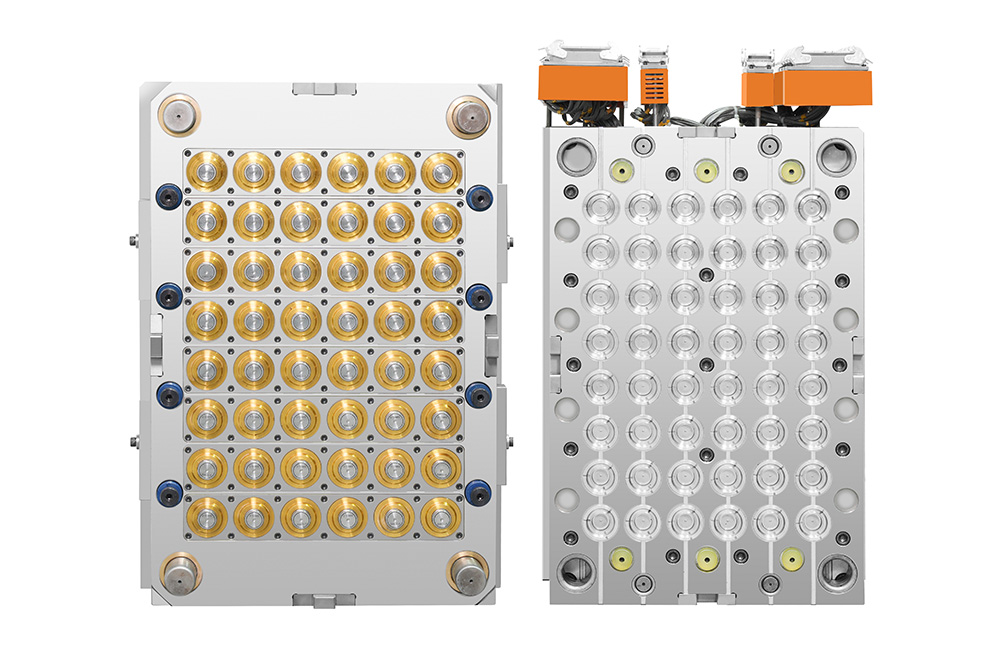
Why Does Temperature Balance Matter in a Cap Mold?
In a multi-cavity tool, one machine cycle produces several caps under nominally shared process settings. That does not guarantee that every cavity experiences identical melt delivery, pressure history, heat transfer, or local flow conditions. Small differences can appear in part weight, gate appearance, dimensions, or ejection behavior, and the pattern across cavity numbers is more informative than a shift-wide average.
Per-cavity control creates the option to adjust hot-runner temperature settings separately when the evidence supports that response. HEYAN TECHNOLOGY’s cap molds and ring lifting molds identify independent temperature control for each cavity alongside an independent cooling system. The practical value is the ability to evaluate cavity-specific settings within a defined process window, not an automatic guarantee that parts will become uniform or cycles will shorten.
The first task is therefore diagnostic: label samples by cavity and confirm that the difference repeats under stable material, machine, and measurement conditions. If it does, temperature becomes one variable to test rather than the assumed cause.
Compare the cavity-by-cavity spread across repeated cycles, not just the overall mean. A persistent local difference points to a cavity condition to investigate; an all-cavity shift suggests a common machine or material change.
What Does Hot-Runner Control Change at Each Cavity?
Hot-runner temperature and mold cooling are related to the part’s thermal history, but they describe separate control systems. To evaluate cavity settings correctly, distinguish the controller zones from the mold’s cooling circuits and sensor locations.
How Are Hot-Runner Zones Mapped to Cavities?
For a multi-cavity injection mold, confirm how hot-runner zones map to cavities, which sensors provide feedback, which setpoints can be adjusted independently, and how actual values are logged. In particular, establish whether “per-cavity control” means one controllable hot-runner zone per cavity or a different arrangement. That distinction matters because the controller’s zone map determines what a process engineer can change and what trial data can be interpreted.
Why Is Mold Cooling a Separate Variable?
Individual hot-runner settings do not establish that each cavity has its own adjustable cooling loop. Review both layouts and their temperature measurement points. A controller reading reflects its sensor location, not the cap itself, so consider the setting, actual reading, process conditions, and part measurements together.
When Is Independent Temperature Control Useful for Caps?
Individual adjustment is worth evaluating when repeated, cavity-identified samples show a persistent difference and the basic process conditions have been checked. The key distinction is whether the pattern repeats under stable conditions or appears during an uncontrolled trial.
When Do Repeated Cavity Differences Support Adjustment?
For example, if one cavity repeatedly produces a different gate appearance while its neighboring cavities remain stable, the team can compare its hot-runner zone, fill behavior, cooling conditions, and part measurements against the rest of the tool. The symptom does not prove a temperature problem; it identifies where to investigate.
When Does Independent Control Add Little Value?
The feature is less useful as a first response to inconsistent samples collected without cavity labels, changing resin lots, unstable machine conditions, or unverified measurement methods. Adjusting one zone in those conditions can make a temporary result look better while leaving its cause unknown. The change may also affect more than the visible characteristic, so compare all relevant cap requirements after any setting change.
For projects with several cap variants or a known history of cavity-specific differences, ask how settings will be documented and what baseline applies after a product or resin change. The answer should fit the tool’s control architecture, not assume a feature name guarantees a particular adjustment range.
During broader cap-mold selection, consider the control architecture alongside the closure design, expected cavity count, machine interface, and trial plan. The right question is not simply whether individual settings are available, but whether the project needs them and can validate their effect.
How Should Buyers Evaluate Cap-Mold Temperature Data?
Evaluate the data in three stages: establish a cavity-level baseline, interpret the pattern before adjusting a zone, and check the result against the closure’s acceptance requirements. Keep the resin, machine recipe, cooling-water conditions, and sampling method stable throughout the comparison.
What Should the Cavity-Level Baseline Include?
Record the hot-runner settings and actual readings, identify every sample by cavity, and capture repeated measurements before changing a setting. Then adjust one selected zone while leaving the others at baseline. Compare repeated samples, not just one part, and record both the targeted characteristic and the other acceptance measurements that matter to the closure.
How Should Cavity Signals Be Interpreted?
|
Observed cavity signal |
Compare before changing temperature |
|---|---|
|
Part-weight difference |
Cavity fill, shot stability, scale repeatability, and sample timing |
|
Gate appearance difference |
Gate condition, material flow, zone readings, and cooling conditions |
|
Dimensional or fit variation |
Measurement method, cavity identification, shrinkage conditions, and drawing limits |
|
Intermittent variation |
Resin and machine stability, sampling interval, and whether the pattern repeats |
This is a diagnostic map, not a substitute for the product drawing or the agreed acceptance method. If changing one zone improves one measurement but worsens another, record the trade-off and review the full closure requirement before choosing a setting. A successful trial is one that produces repeatable, cavity-identified evidence under the agreed conditions.
How Can a Temperature Trial Be Validated?
Agree on sample size, measurement method, and cap acceptance limits before a trial. Record the baseline, change one variable at a time, and repeat. Include rejected parts so an improvement in one characteristic does not hide a new defect. If a change has no repeatable effect, return to baseline and investigate other variables.
FAQ
The following questions cover common specification and trial details that sit alongside the main control decision.
Does Every Cavity Need a Different Temperature Setting?
No. Independent control provides the option to adjust a cavity when repeatable evidence supports it. Cavities may operate with the same settings when the process is stable. Separate controls do not mean every setting should be different.
Is Hot-Runner Temperature the Same As Mold Cooling Temperature?
No. Hot-runner settings control heating zones that deliver melt through the manifold and nozzles. Mold cooling conditions remove heat through cooling passages. Specify, monitor, and discuss these systems separately.
Can Temperature Control Correct Uneven Cap Weight by Itself?
Not reliably. Weight differences can have several causes, including fill balance, resin variation, machine conditions, cooling, or measurement error. Compare those factors and cavity-level data before attributing a weight pattern to a hot-runner setting.
What Should a Temperature Trial Record for Each Cavity?
Record the cavity identifier, hot-runner setpoint and actual reading, stable machine and material conditions, cooling conditions, sample time, and measured cap results. Note every change so the trial can be reviewed and repeated.
Should a Buyer Specify Individual Control Before Mold Design?
Raise the requirement during technical scope definition. The mold and control supplier can clarify the zone arrangement, feedback, adjustment options, and trial records before the design is finalized.
How Can You Discuss a Cap-Mold Temperature Scope?
For a useful technical discussion, prepare the closure drawing, resin specification, injection-machine model, proposed cavity count, and any cavity-identified trial observations. Include which cap dimensions or quality characteristics matter most and how they are measured. Discuss your cap-mold application with HEYAN TECHNOLOGY so the temperature-control scope can be considered alongside the mold and machine interfaces.