

PET Bottle Capacity: Nominal vs. Brimful and Headspace
More than just the “500 mL” on the drawing of a PET bottle is needed to define its PET bottle capacity. The nominal capacity of a product is indicated by the intended quantity of product. The brimful capacity of a bottle is the volume of the bottle up to its rim. The remaining space after filling depends on the fill volume, the closure and the measurement conditions.
Identify the key values to be set for your bottle design prior to approval. Recommend that the filling conditions and required headspace be defined first and then verify that the bottle geometry provides this headspace. This ensures that packaging, mold-design and filling departments are working to the same objective.
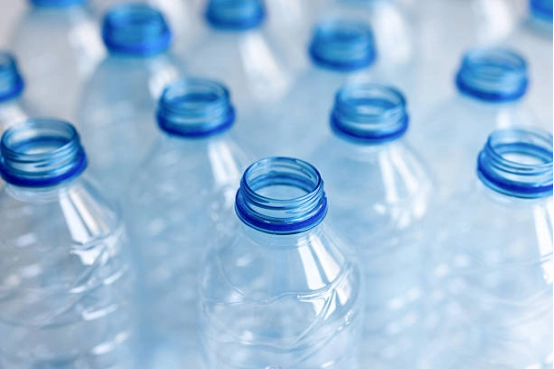
What Do Nominal and Brimful Capacity Mean?
Separate out the capacity terms before calculating the space requirements of the package.
Separate Label Volume from Maximum Capacity
|
Term |
Meaning |
Design Use |
|
Nominal capacity |
Intended commercial quantity, such as 500 mL |
Defines the pack size |
|
Actual fill volume |
Il volume di liquido erogato quando le condizioni sono specificate. |
Determines remaining space |
|
Brimful capacity |
Volume to the agreed rim endpoint, also referred to as overflow capacity. |
Defines the open bottle’s maximum capacity |
A bottle with a label size of 500 mL needs more than 500 mL filling volume at brimful. The difference however does not necessarily equal with the headspace of a bottle during filling. The filling target does not necessarily equal with the label size.
Define Headspace under Stated Conditions
The term ‘headspace’ refers to the space above the filled product in a bottle. The open-bottle-allowance must be clearly distinguished from the remaining space after closure application. A plug within the bottle can even fill part of this space.
Please note that the temperature, pressure conditions as well as whether the bottle is closed or not have to be specified. A visible gap has to be measured in mm and does not directly translate into a volume in ml.
How Do You Calculate Bottle Headspace?
Start with a volume balance and then check how production variations affect it.
Calculate Free Space with the Closure Fitted
For a given bottle shape at a given temperature and pressure:
H = Vb − Vf − Vc
Here, H is the remaining enclosed free space, Vb is the brimful capacity, Vf is the actual liquid fill height and Vc is the net closure intrusions minus any connected internal cap space above the rim for the reference point at the brim. All values are in mL.
For an illustrative 500 mL pack:
- Brimful capacity: 530 mL
- Actual fill: 503 mL
- Net closure displacement: 2 mL
- Remaining free space: 530 − 503 − 2 = 25 mL
Confirm the net displacement for this sample using the matching cap and PET neck finish. Do not subtract the entire volume of the cap from the headspace volume.
Allow for Capacity and Filling Variation
The lowest acceptable brimful capacity should be paired with the highest expected fill. For a 527 mL bottle of 505 mL fill and a 2 mL closure allowance, this would result in a 20 mL headspace.
Express percentages with the denominator clearly stated. Thus, the nominal open-bottle allowance is (530 – 500)/530 x 100% = 5.7% of brimful capacity. This is to be distinguished from the free space of closed containers calculated above, and it is not the same as the required headspace which must be established by product and filling trials.
How Does Bottle Geometry Affect Capacity?
The capacity of a bottle is determined by a combination of the bottle contour and the material of the bottle wall.
Review the Shoulder, Base, and Fill Level
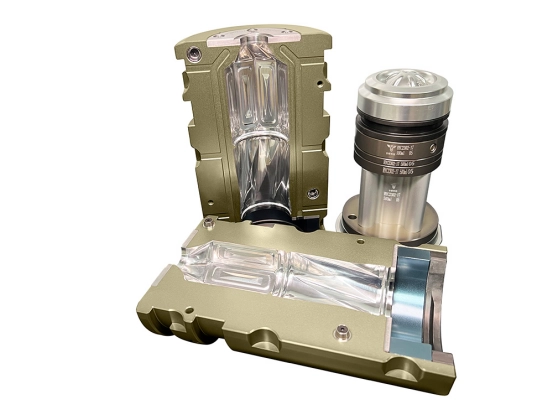
Changes in volume of a PET bottle blow mold can occur with a change in shoulder, a change in depth of base push-up or with a change in recessed grip and that bottle is still to be of the same overall height. Review capacity on these features.
It is also important to compare the fill level proposed with the local cross-section. An additional volume of liquid will lift the liquid up much more in a narrow neck than in a wide body of the bottle. As a result two bottles with the same brimful capacity can show different apparent fill levels.
Account for the Finished Bottle Wall
The mold cavity is the shape of the outside of the bottle. The liquid forms the inside of the bottle, and so just the volume of the cavity does not equal the volume of the finished bottle – the walls of the bottle and the exact shape that is formed also count.
Changing preform geometry needs to be checked for new capacity and new material distribution. Adding resin does not automatically add volume to contain liquid. It is recommended to check proposed new capacity together with shoulder, base, label area and handling dimensions before releasing new geometry.
How Should You Verify PET Bottle Capacity?
Use a repeatable capacity measurement method and then test the method using the actual products.
Measure Brimful Volume Consistently
- Condition the test specimens for the stipulated time and temperature. Check the mould cavity number and production batch number.
- Weigh up clean and dry bottles and fill up with water to the marked brim point. Make sure no air bubbles get into the bottle and no droplets of water run down the outside of the bottle.
- Weigh again. Calculate volume as water mass divided by water density at the measured temperature.
- Record the individual results as well as their variation between the cavities, not only their mean value.
Mass is measured in grams and density in g/mL so the calculated volume is in mL. Choose a balance with sufficient resolution to measure within the specified tolerance. Agree an endpoint and use the same method as the other operator.
Validate the Actual Filling Conditions
Check intended product, fill target and production closure. Check fill level, foaming, overflow during handling and space left after capping. Include relevant temperature changes i.e. cooling down and storage conditions.
It is necessary to agree on the acceptance limits for ‘brimful’ capacity and filling behavior prior to releasing samples for test. A test for water-based capacity measurement and a product filling test are assessing different characteristics and should be released against the same drawing revision.
How Can You Move a Bottle Capacity Design Forward?
Detail nominal volume, actual fill volume, capacity tolerance at brimful, closure details and test conditions on one design brief. Include a drawing of the bottle and the filling process that was used.
If you are developing a new PET package, discuss your bottle design with us at HEYAN TECHNOLOGY. Use the capacity review to align the bottle shape and blow mold design before approving the final geometry.
FAQ
Is There a Standard Headspace Percentage for Every PET Bottle?
Product behavior, filling temperature, closure geometry and internal pressure all change for the same question. Define the percentage basis and check the resulting volume with package and process.
Can a Heavier Preform Increase Bottle Capacity?
Not by itself. Preform weight describes polymer mass. With the same outside geometry, additional wall material can reduce internal volume. Confirm capacity on formed bottles rather than inferring it from weight.
Can the Same Bottle Serve Still and Carbonated Drinks?
The bottle must have sufficient matching capacity. In addition to that, carbonated products need a bottle with sufficient pressure resistance and a suitable base as well as adequate closure performance. This must be checked before other products are filled in the same bottle.
Should Hot-Fill Capacity Be Checked Only at Room Temperature?
No. Test at a fixed reference temperature for capacity tests. Then test filling hot and subsequent cooling down. Volume of product and shape of bottle can change the headspace and appearance of the product.