

How to Choose a PET Bottle Blow Mold for Your Blowing Machine
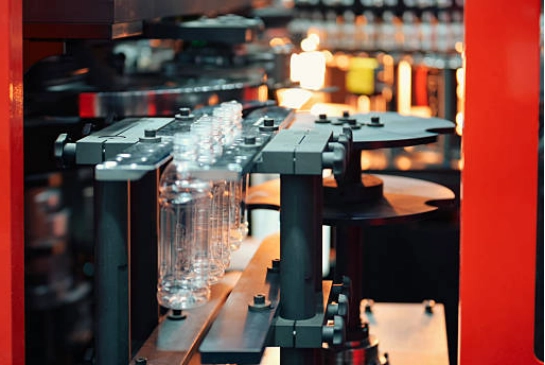
A PET bottle blow mold works as part of a system. The bottle drawing matters, but so do the mold carrier, preform, cooling circuit, air supply, and target output. A mold may produce good samples during a short trial and still become unstable after several hours. One cavity starts sticking. Dimensions drift.
The right mold should run consistently at the required speed, with acceptable scrap and practical maintenance.
Understand Your Blowing Machine Specifications
The blowing machine sets the mechanical limits. Confirm them before discussing logos or bottle appearance.
Machine Brand and Model
Provide the manufacturer, exact model, production year, cavity count, and machine type. Machine builders sometimes revise carriers, neck plates, and cooling connections without changing the series name.
An existing mold drawing is best. On retrofit jobs, a few millimeters around a locating block can decide whether installation takes two hours or two days.
Mold Mounting and Interface Dimensions
Check mold height, width, thickness, locating surfaces, bolt holes, neck plate dimensions, base mold travel, cooling ports, and air connections. Hose clearance must also be checked with the mold closed.
A fitting may look accessible on a bench and still hit the carrier. Ordinary detail. Expensive delay.
Determine Whether You Need a Linear or Rotary Blow Mold
Linear and rotary molds form bottles similarly, yet their working conditions differ.
Linear Blow Molds
Linear machines are often used for medium output, shorter runs, and frequent bottle changes. Mold accessibility, manageable weight, quick connections, and repeatable positioning matter.
Frequent format changes favor a simple mold that operators can handle reliably.
Rotary Blow Molds
Rotary molds run continuously at higher speed. Cavity consistency, mold weight, balance, cooling, and dimensional accuracy become more critical.
Carrier geometry and locking must match exactly. Adapting a linear mold by changing a few mounting holes is rarely sound engineering.
Confirm Bottle and Preform Specifications
The mold defines the final shape, but the preform provides the material. They must be assessed together.
Bottle Design Information
Send a dimensioned drawing or accurate 3D model showing volume, height, diameter, neck finish, target weight, base design, label panel, grip features, and top load requirement.
A deep grip can pull material from the opposite wall. Sharp shoulder transitions become thin. Decorative ribs may disturb label contact.
Preform Specifications
Provide preform weight, neck diameter, body length, wall thickness, material grade, and available heating information. The stretch ratio must suit the bottle.
A mold cannot correct a poor preform match. A short preform may leave too much material in the base and too little in the shoulder. A long one may create heavy feet. Heating adjustments help, but only within limits.
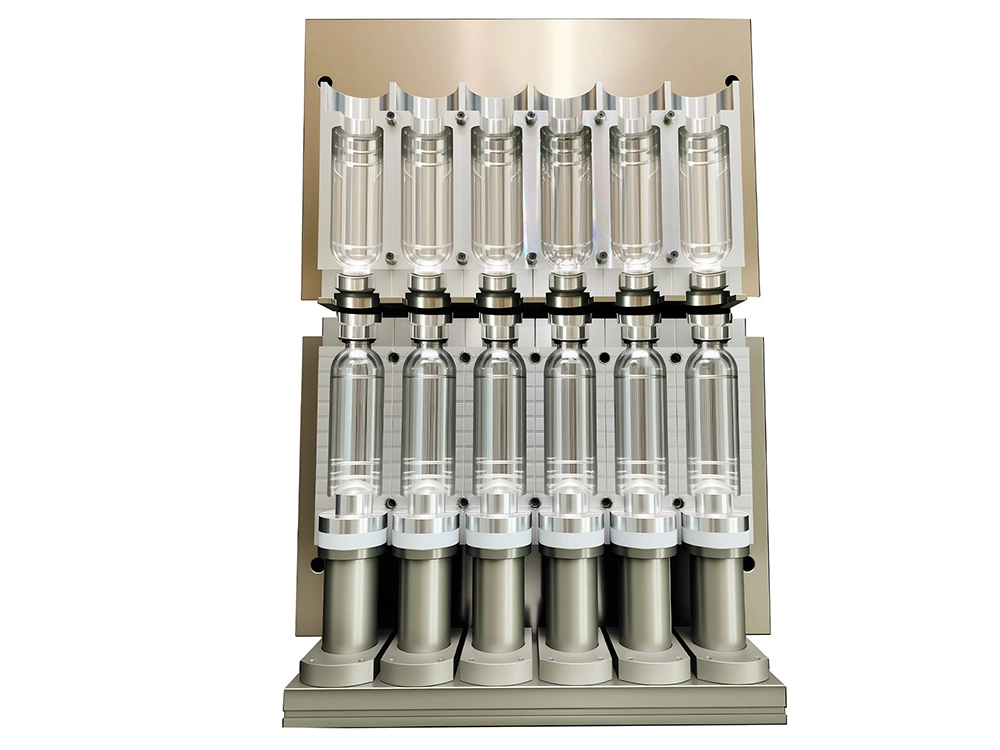
Match the Mold to Your Bottle Application
A still water bottle usually needs low weight, high output, and stable conveyor handling. A carbonated beverage bottle needs a pressure resistant base. Hot fill bottles must manage thermal shrinkage and vacuum. Edible-oil bottles need panel stiffness, grip performance, and clean pouring.
The supplier should know filling temperature, internal pressure, labeling method, transport conditions, and pallet pattern. A bottle can look excellent when empty and fail after warm filling or warehouse stacking.
Copying the outside shape is not the same as engineering the package.
Evaluate Mold Material and Surface Treatment
Material choice affects heat transfer, machining accuracy, wear, mold weight, and repair work.
Aluminum Materials
High strength aluminum transfers heat efficiently and keeps mold weight reasonable. Ask for the actual grade and heat treatment condition.
Soft aluminum often shows damage around the parting line and locating surfaces. On a high speed machine, a small mark can develop into flash or poor release.
Steel Components and Surface Treatment
Neck parts, base mechanisms, and guides may use steel or treated alloys. Surface treatments can improve hardness, corrosion resistance, and release.
Ask where treatment is applied and how the area can be repaired. A coating sounds impressive in a quotation; repairability matters more after several million cycles.
Check Cooling, Venting and Bottle Release Design
Many problems blamed on process settings begin in the mold.
Cooling System
Cooling channels should follow the bottle geometry, especially around the base and shoulder. Uneven cooling causes dimensional drift, base deformation, and cavity differences.
Check water flow, pressure drop, connector size, and cleaning access. More channels do not automatically mean better cooling. A poorly balanced circuit sends most water through the easiest path.
Venting
Trapped air must escape as the bottle expands. Weak venting can reduce detail definition, create haze, or produce inconsistent mold contact.
Vents should sit near ribs, logos, base details, and areas reached late during expansion. They also need to remain clean in daily production.
Bottle Release
Release depends on draft, surface finish, parting line condition, base movement, and opening sequence. A bottle that sticks once every few hundred cycles is still a production problem.
Scratches near the shoulder, base scuffing, or rocking bottles often indicate mechanical contact rather than unstable blowing pressure.
Consider Production Speed and Number of Cavities
Select cavity count around saleable bottles per hour, not machine maximum. Cycle time, oven performance, cooling capacity, compressor output, and downstream filling speed must support the same target.
A four cavity mold running steadily can outperform a six cavity system that stops for cooling alarms or bottle jams. Include changeovers, quality checks, and normal losses in production estimates. Nameplate speed is not shift output.
Verify Mold Testing and Quality Inspection
Testing should cover dimensions, volume, wall thickness distribution, leakage, top load, base stability, and cavity consistency. Pressure bottles may also need burst testing.
Request cavity-marked samples, an inspection report, trial video, mold drawings, spare parts details, and maintenance instructions. Mixed samples can hide a weak cavity.
A ten minute demonstration proves that the mold can cycle. Longer trials reveal temperature drift, sticking, loose fittings, and unstable base cooling.
Compare More Than the Initial Mold Price
Compare material grade, cooling design, accuracy, trial conditions, spare parts, cycle time, delivery, and support.
A cheaper mold becomes expensive when it adds downtime or bottle weight. On a high volume water line, one unnecessary gram of PET may cost far more than the difference between two mold quotations.
The stronger quotation defines what will be delivered and how performance will be accepted.
Information to Send Your PET Blow Mold Supplier
Send the machine model, year, type, cavity count, bottle drawing, preform data, neck finish, target output, filling temperature, pressure, and cooling conditions.
Add mold station photos and an existing mold drawing when available. Mention known problems such as thin shoulders, unstable bases, difficult release, or long cooling time. Those observations change the engineering approach.
HEYAN TECHNOLOGY develops customized PET bottle blow molds for water, beverages, edible oil, and household chemicals. A useful evaluation starts with accurate machine, bottle, preform, and production data.
Frequently Asked Questions
Q: Can a PET blow mold fit different blowing machine brands?
Usually not without modification. Mounting dimensions, carriers, neck plates, base movement, locking systems, and cooling connections vary. Conversion may be possible, but every interface should be measured before machining.
Q: What information is needed for a PET blow mold quotation?
Provide the machine model, cavity count, bottle drawing, preform drawing, neck finish, target output, bottle application, filling conditions, and test requirements. Photos of the current mold station reduce uncertainty.
Q: How long does a PET bottle blow mold last?
Mold life depends on material, speed, maintenance, bottle geometry, cooling water quality, and operating conditions. Wear often appears around the parting line, neck area, base mechanism, and locating surfaces. Regular cleaning and timely repair matter more than one promised cycle figure.
Q: Can an existing bottle design be lightweighted?
Yes, but the change should be checked through preform selection, stretch ratio analysis, wall thickness measurement, top load testing, drop testing, and line trials. Removing material without changing the bottle structure often creates thin shoulders, weak bases, or unstable conveyor performance.

