

How to Calculate PET Preform Mold Cavity Count Based on Target Output
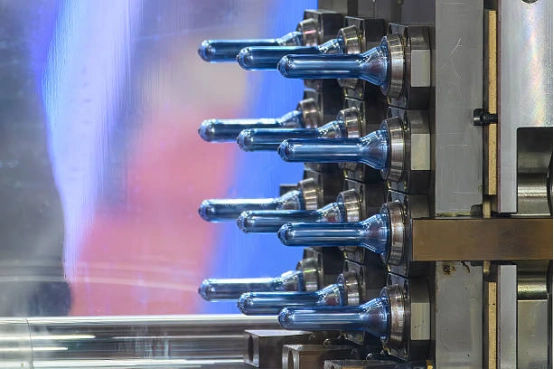
The cavity count affects output capacity right away. It also changes the machine size needed. Other areas include energy consumption, the investment in the mold, and the cost for one preform.
But using more cavities does not guarantee better financial performance. Manufacturers must take into account the target output. They also need to review the molding cycle time. Equipment capacity is another point. Production efficiency and maintenance over many years play roles too.
What Is PET Preform Mold Cavity Count?
PET preform mold cavity count refers to the number of preforms produced during one complete injection molding cycle. For example, a 48-cavity mold produces 48 preforms every time the mold completes injection, cooling, opening, and ejection.
Common configurations include 24, 32, 48, 72, and 96 cavities, although customized configurations are also available. In theory, increasing cavity count raises hourly output. In practice, the result also depends on cycle time, machine performance, cooling efficiency, and production stability.
Information Needed Before Calculating Cavity Count
A reliable calculation begins with realistic production data. Using ideal figures can lead to an undersized system that cannot meet demand or an oversized system with unnecessary investment and operating costs.
Target Production Output
Start by deciding how many good preforms the factory needs to make. Measure this per hour, per day, per month, or per year. Hourly output is usually the easiest figure for cavity calculation.
Production targets need to match real sales predictions. They should include seasonal demand and inventory needs. Future growth plans matter as well. You must separate total molded parts from the ones you can sell. Rejects do not count as useful output.
Expected Cycle Time
Cycle time shows the seconds needed for one full molding cycle. The process covers material injection. It includes holding pressure. Cooling follows. Mold opening, preform removal, and mold closing complete the cycle.
PET preform weight and wall thickness affect cycle time. Resin condition is a factor. The design of cooling channels matters. Machine speed and automation levels play a part. Manufacturers should avoid optimistic guesses. They should use information from similar preforms and machines instead.
Available Operating Time
Available operating time includes the number of hours per shift, shifts per day, and production days per year. Planned mold changes, preventive maintenance, public holidays, and cleaning periods should be deducted.
A factory operating continuously has different capacity requirements from a facility running one or two shifts. Annual demand should therefore be converted into realistic hourly output before calculating the required cavity count.
Production Efficiency
No production line operates at 100% efficiency throughout the year. Material interruptions, minor equipment stops, quality checks, maintenance, and mold changes reduce actual output.
Production efficiency can be expressed as a percentage or OEE factor. If a line is expected to operate at 85% efficiency, use 0.85 in the calculation. Historical factory data provides the most reliable value.
PET Preform Mold Cavity Count Formula
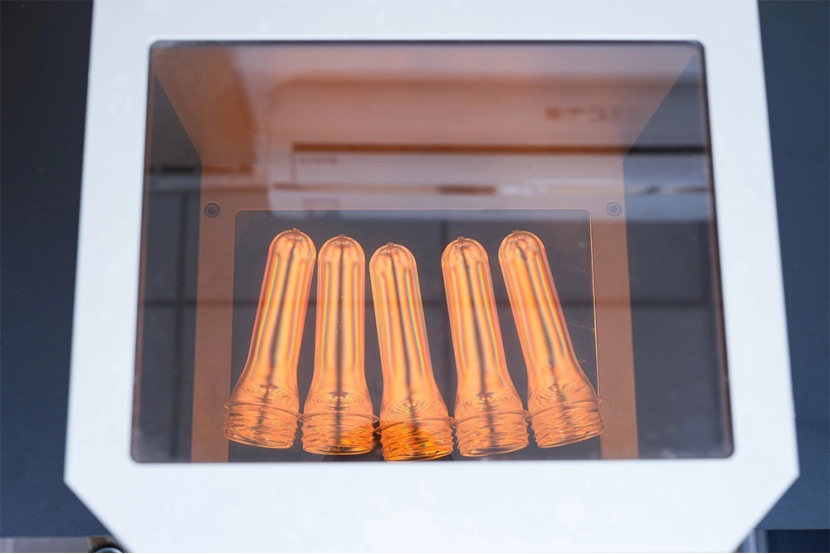
The preliminary number of mold cavities can be calculated with the following formula:
Required cavities = Target output per hour × Cycle time in seconds ÷ 3,600 ÷ Production efficiency
For example, if production efficiency is 85%, enter it as 0.85. Because a mold cannot contain a fraction of a cavity, the result must be rounded up to a practical cavity configuration.
The formula can also be reversed to estimate output:
Hourly output = Number of cavities × 3,600 ÷ Cycle time × Production efficiency
These formulas provide a capacity estimate. They do not replace the engineering assessment required to confirm machine and mold compatibility.
Worked Example: Calculating a 12,000-Preform-per-Hour Line
Consider a manufacturer planning to produce 12,000 PET preforms per hour. The expected cycle time is 18 seconds, and the estimated production efficiency is 85%.
The required cavity count is:
12,000 × 18 ÷ 3,600 ÷ 0.85 = 70.6 cavities
The calculated requirement is approximately 71 cavities. Because this is not a practical standard configuration, a 72-cavity mold would be the initial selection.
The estimated actual output of this mold is:
72 × 3,600 ÷ 18 × 0.85 = 12,240 preforms per hour
This configuration provides a small capacity margin. The mold should only be confirmed after checking the injection molding machine, cooling system, hot runner, and auxiliary equipment.
Factors That May Change the Final Cavity Count
The mathematical result is the starting point rather than the final specification. Several engineering and commercial factors may require a different configuration.
Injection Unit Shot Size
The injection unit must deliver enough molten PET for every cavity during each cycle. Total shot weight includes the weight of one preform multiplied by the number of cavities, together with an appropriate processing allowance.
A machine should not operate continuously at its maximum injection capacity. Adequate reserve capacity helps maintain stable melt quality, repeatable filling, and reliable production.
Clamping Force and Mold Dimensions
Higher cavity counts normally require larger mold bases and greater clamping force. Engineers must check platen dimensions, tie-bar spacing, mold thickness, opening stroke, and ejector requirements.
A machine may have sufficient shot capacity but still be unable to accommodate the physical dimensions of the selected mold.
Preform Weight and Neck Finish
A heavier preform requires more PET resin per cycle and may require longer cooling. This can limit the number of cavities that a particular machine can support.
The neck finish also influences mold structure. Thread geometry, support-ring dimensions, closure requirements, and neck tolerances affect component design, mold complexity, and maintenance needs.
Hot Runner and Cooling Performance
A balanced hot runner sends material evenly to each cavity. Poor melt balance creates problems. Weight may vary between preforms. Filling can stay incomplete. Gate defects appear. Preform quality becomes inconsistent.
Cooling performance matters a lot. Cooling takes up much of the molding cycle in many cases. Good cooling design allows higher output. This can happen without the need for extra cavities.
Utility and Auxiliary Equipment Capacity
The complete system must support the calculated production rate. This includes the PET dryer, dehumidifier, chiller, material loader, compressor, robot, conveyor, and preform handling equipment.
An undersized chiller or dryer can prevent a high-cavity mold from reaching its expected cycle time. Utility capacity should therefore be evaluated as part of the complete line, not after mold production.
Maintenance and Investment Budget
More cavities generally increase mold cost, machine requirements, spare-part inventory, and maintenance complexity. A high-cavity mold may reduce unit production costs at high utilization, but it can also create greater financial risk when demand is unstable.
Manufacturers should compare initial investment, energy consumption, maintenance cost, expected downtime, and cost per qualified preform over the complete project lifecycle.
How to Select the Most Practical Configuration
A smart selection process looks at several configurations. It does not depend on a single calculation. Manufacturers might study a mold with more cavities and normal cycle time. They can compare it to one with fewer cavities that offers faster cooling and smaller first costs.
Compare each choice on real hourly output. See how well it works with the machine. Energy use is key. Investment levels and maintenance needs must be reviewed. Think about room for future growth too. The best practical setup may not have the highest cavity count. The right one delivers the needed output without problems. It also keeps the cost per preform as low as possible over time.
Work With HEYAN TECHNOLOGY on Mold and Line Configuration
HEYAN TECHNOLOGY supplies PET preform molds and complete injection molding system solutions. Its engineering team can evaluate preform weight, neck finish, target output, expected cycle time, machine specifications, cooling requirements, and auxiliary equipment.
Manufacturers can combine a suitable multi-cavity injection mold with an integrated injection molding system complete line supporting program rather than selecting each component separately.
Frequently Asked Questions
Q: Does doubling the cavity count double production output?
It doubles theoretical output only when cycle time and production efficiency remain unchanged. In real production, additional cavities may require longer cooling, a larger machine, or upgraded auxiliary equipment. Actual output must be calculated using the complete system specifications.
Q: Should cavity count be calculated using 100% efficiency?
No. Using 100% efficiency ignores maintenance, quality inspections, minor stops, material changes, and other production losses. A realistic efficiency factor based on historical OEE data produces a more reliable mold and capacity plan.
Q: Can an existing injection molding machine support a higher-cavity mold?
Only after its shot size, clamping force, platen dimensions, tie-bar spacing, mold thickness, opening stroke, and control system have been checked. The dryer, chiller, robot, and other auxiliary equipment must also support the higher production rate.
Conclusion
The process of calculating PET preform mold cavity count starts with target output. Cycle time comes next. Realistic production efficiency is part of it. The final choice needs to include machine capacity. Mold dimensions matter. Hot runner balance and cooling performance are necessary to review. Utilities and costs over the project life need consideration too.
Planning a new PET preform production line?
Send HEYAN TECHNOLOGY your preform weight, neck finish, target hourly output, and machine specifications to receive a recommended mold cavity configuration.