

Compression Molding vs. Injection Molding for Bottle Caps
Why Does the Molding Process Matter for Bottle Cap Production?
A bottle cap looks simple until production starts. Wall thickness affects cooling. Thread geometry changes application torque. An unstable seal bead may leak only after filling and transport.
The molding process influences these details, plus output, maintenance, and cost per thousand caps. Compression molding often suits long runs of standard beverage closures. Injection molding makes more sense when geometry, product variety, or existing equipment matters.
The useful question is which process fits the cap and the production plan.
What Is the Main Difference Between Compression Molding and Injection Molding?
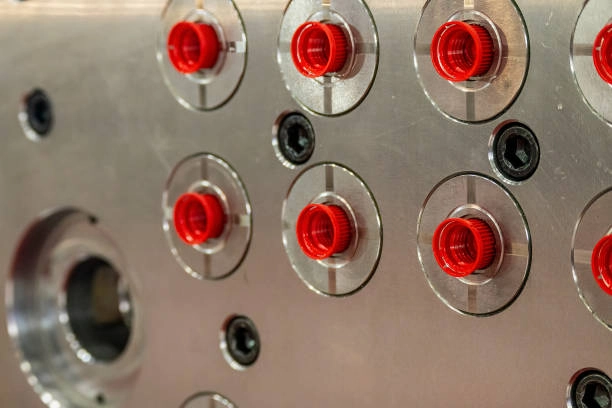
Compression molding places a measured amount of molten plastic into an open cavity. The mold closes and pressure forms the cap. Bottle caps are normally made on rotary systems with individual stations.
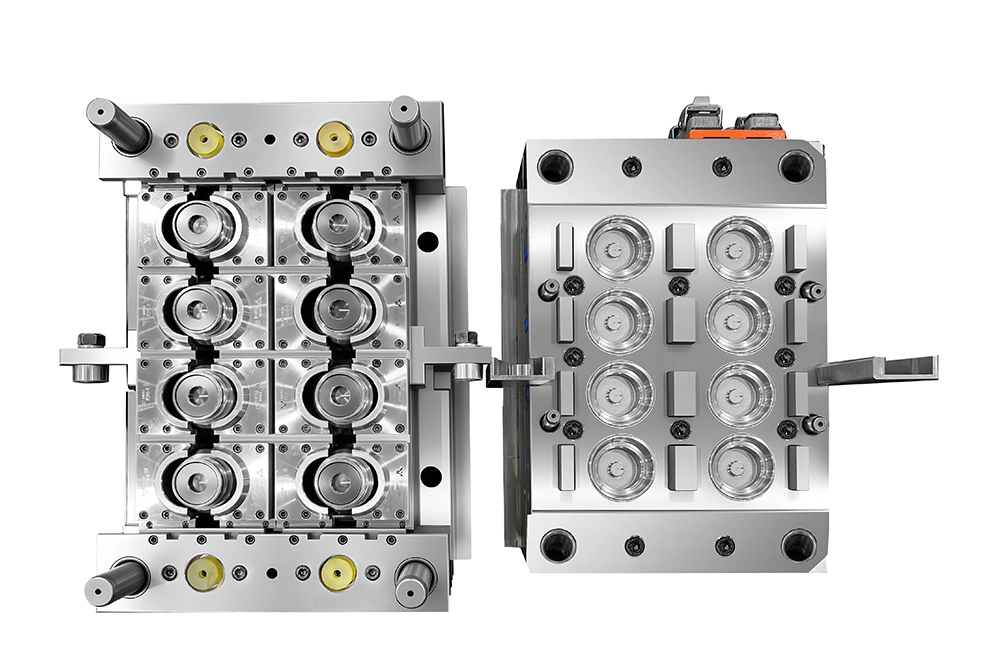
Injection molding fills a closed multi-cavity mold through a nozzle, hot runner, and gate. Holding pressure controls shrinkage before cooling and ejection.
The difference is how material enters the cavity. That affects melt temperature, flow behavior, gate appearance, cavity balance, and maintenance.
How Does Each Bottle Cap Molding Process Work?
The process sequence explains most practical differences. A cap may need redesign before moving to the other method.
How Does Compression Molding Produce Bottle Caps?
PP or HDPE is melted in an extruder. A controlled charge enters an open cavity. The cavity closes, compresses the material, cools the cap, and ejects it while the rotary machine keeps moving.
Downstream equipment may slit the tamper band, inspect the cap, or send it to packing. Material residence time is usually short, and there is no conventional injection gate on the cap top.
How Does Injection Molding Produce Bottle Caps?
Resin melts inside the injection unit and enters a closed mold through the hot runner. Packing pressure compensates for shrinkage. Cooling prepares the cap for ejection.
The difficult part is balance. In a high-cavity mold, every cavity must fill and cool in nearly the same way. Small temperature differences can cause weight variation, uneven threads, or unstable opening torque.
Caps may then pass through slitting, inspection, or assembly.
How Do Compression and Injection Molding Compare in Production?
These are typical tendencies. Resin, machine condition, cooling water, and operator discipline can change the result.
| Comparison Factor | Compression Molding | Injection Molding |
| Material filling | Charge compressed in each station | Melt injected through runner and gate |
| Production fit | Long runs of standard caps | High volume with more product variation |
| Processing temperature | Generally lower | Generally higher |
| Cap-top gate mark | None | Small gate vestige may remain |
| Design flexibility | Best with compression-focused designs | Better for complex molded features |
| Maintenance focus | Stations and extrusion system | Hot runner, cooling, ejectors, balance |
One plant may run one 28 mm water cap for months. Another may produce sports closures, edible-oil caps, and promotional caps on the same equipment group. The production schedule often settles the argument faster than a specification sheet.
Which Process Produces Better Bottle Cap Quality?
Quality does not come from the process name alone. Tool accuracy, cooling balance, venting, and process control decide what inspection sees.
Which Process Offers Better Dimensional and Sealing Consistency?
Compression molding can deliver stable lightweight closures because each charge is controlled and each station works independently. Lower processing temperature may also reduce thermal stress.
Injection molding can meet tight tolerances, but the mold must be balanced. Uneven hot-runner temperatures or cooling flow create cavity-to-cavity differences.
A cap may pass dimensional inspection yet show wide torque variation on the capping line. Thread shrinkage or uneven cooling is often behind it.
Which Process Handles Complex Cap Features Better?
Injection molding usually has the advantage with special ribs, dispensing features, unusual seals, or complex tamper-evident details.
Compression molding performs well when the cap is designed around the process from the start. Late geometry changes can be less convenient.
For injection projects, replaceable inserts, stable hot-runner control, and accessible cooling channels matter more than a large cavity number on a quotation. They reduce downtime when one cavity starts producing inconsistent parts.
Which Process Has the Lower Bottle Cap Production Cost?
Machine price gives an incomplete answer. The useful number is cost per thousand accepted caps:
Resin + energy + labor + scrap + maintenance + downtime + tooling allocation
Resin often dominates, so a small reduction in cap weight may matter more than a modest energy difference.
Compression molding can be economical for a dedicated standard-cap program. Injection molding may cost less for a factory that already owns suitable machines, chillers, material handling equipment, and trained technicians.
Frequent changeovers can erase the benefit of high nominal output.
When Should You Choose Compression or Injection Molding for Bottle Caps?
The choice becomes clearer when the cap program is treated as a production system rather than a machine purchase.
Choose Compression Molding When…
Compression molding fits very high volumes of standardized beverage caps, especially when the line runs long campaigns with few design changes.
It also suits projects where low cap weight, gate-free appearance, short thermal exposure, and continuous production matter. A plant making one water-cap specification for several bottlers is a typical case.
Choose Injection Molding When…
Injection molding fits complex caps, multiple SKUs, and factories using established injection equipment and maintenance skills.
The mold should be judged as a system. Hot-runner layout, cavity-level temperature control, cooling balance, insert replacement, ejection, and machine compatibility all affect output.
HEYAN TECHNOLOGY’s bottle cap mold configuration addresses these points through controlled hot-runner distribution, independent cavity temperature management, separate cooling, and replaceable forming inserts. These details solve ordinary factory problems: uneven filling, long repair stops, and inconsistent dimensions.
For a new line, HEYAN TECHNOLOGY can also match the mold with the injection machine, auxiliaries, cooling, automation, and take-out equipment. Good components can still miss the cycle target when their timing and capacities do not match.
What Information Should You Provide Before Selecting a Cap Mold or Production Line?
A supplier needs more than a sample cap. Provide the cap drawing, neck-finish standard, resin grade, target weight, hourly output, annual volume, SKU count, changeover frequency, tamper-band design, torque limits, leakage criteria, and inspection method.
For an existing machine, include clamping force, tie-bar spacing, injection-unit size, shot capacity, screw diameter, and mold-height limits.
For a complete line, add cooling-water data, compressed air, floor layout, power supply, automation level, and downstream requirements. HEYAN TECHNOLOGY’s injection-system planning is useful when mold, machine, cooling, handling, and take-out timing must be checked together.
Which Bottle Cap Molding Process Is Better?
Compression molding is usually stronger for continuous production of standardized lightweight beverage caps. Injection molding is often more practical for complex caps, multiple programs, and factories with injection infrastructure.
A cap drawing and a realistic production schedule reveal more than a general comparison. So does the cooling-water specification. That detail is often ignored until cycle time refuses to match the quotation.
The sensible choice is the process that delivers stable caps at the required output with manageable maintenance.
FAQ
Q: Can injection molding produce high-volume beverage caps?
Yes. A balanced multi-cavity mold, stable hot runner, adequate cooling, and a correctly sized machine can support high output.
Q: Is compression molding always more energy efficient?
No. It often uses lower processing temperatures, but total energy depends on machine design, cooling demand, auxiliaries, output, and downtime.
Q: Which process is better for tethered caps?
Both can work. Injection molding often allows more freedom for hinge, bridge, and tamper-band geometry.
Q: What causes cavity-to-cavity variation in an injection cap mold?
Common causes include hot-runner imbalance, uneven cooling, venting differences, worn inserts, unstable settings, and inconsistent ejection.
Q: Should the mold and injection machine come from the same supplier?
Not necessarily. One party should still verify machine capacity, shot size, mold dimensions, cooling demand, take-out timing, and cycle targets as one system.