

PET Preform and Blow Mold Design for 5 Gallon Water Bottles
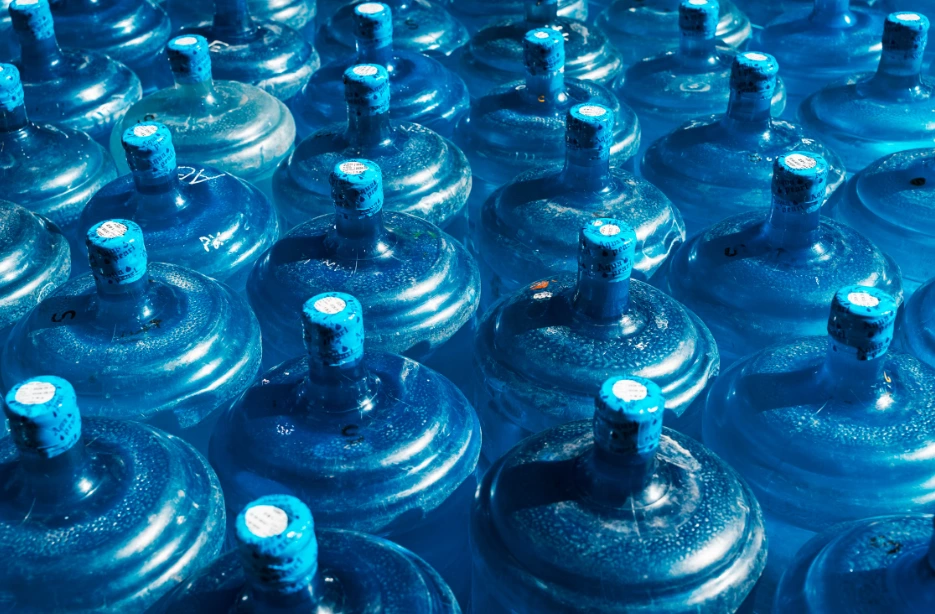
A 5 gallon PET water bottle looks simple until it reaches the line. Then the problems appear: a rocking base, a thin shoulder, or a neck that fits the cap but not the dispenser. Large bottles magnify small design errors.
The preform, heating profile, stretch rod, and blow mold need to work as one system.
What Makes a 5 Gallon PET Bottle Different from a Standard PET Bottle?
A 5 gallon bottle faces harsher handling than a small disposable bottle. It may be lifted by the neck, stacked during delivery, and loaded onto a dispenser many times.
Wall thickness must remain stable across a large surface. The base must stay flat after cooling. The shoulder must transfer load without folding. For reusable bottles, impact resistance matters more than appearance alone.
A thin area in a 500 mL bottle may be cosmetic. In a 5 gallon bottle, it can become a split shoulder or collapsed sidewall.
How Should a PET Preform Be Designed for a 5 Gallon Water Bottle?
The preform controls where the material goes. The blow mold can shape the bottle, but it cannot create material where the preform and heating profile failed to deliver it.
Preform Weight and Wall Thickness
Preform weight should reflect bottle geometry, reuse cycles, drop test conditions, and the target wall thickness map. Adding resin is not always the right correction. A heavy preform with poor stretching can still produce a weak shoulder and an overly thick base.
A familiar result is a bottle that feels strong but fails after repeated delivery. Cutting it open often reveals excess material in the lower body and an almost transparent shoulder.
Balanced distribution matters more than total weight.
Preform Length and Stretch Ratio
Preform length affects axial stretch; diameter affects radial stretch. Both must suit the final bottle dimensions and heating zone.
A short preform may force material into the shoulder too aggressively. A long one may leave too much material in the base. Stretch ratios should be checked across a practical process window. A design that works only at one oven setting will become unstable after heater aging or seasonal temperature changes.
Neck Finish and Handling Ring Design
The neck changes very little during blowing. Thread accuracy, sealing surface, support ring position, and ovality therefore depend on preform mold precision.
The handling ring also affects transfer through the blower and filling line. On older equipment, a ring slightly too wide can interfere with grippers. It looks minor on a drawing. On the machine, it stops production.
What Features Should a 5 Gallon PET Preform Mold Include?
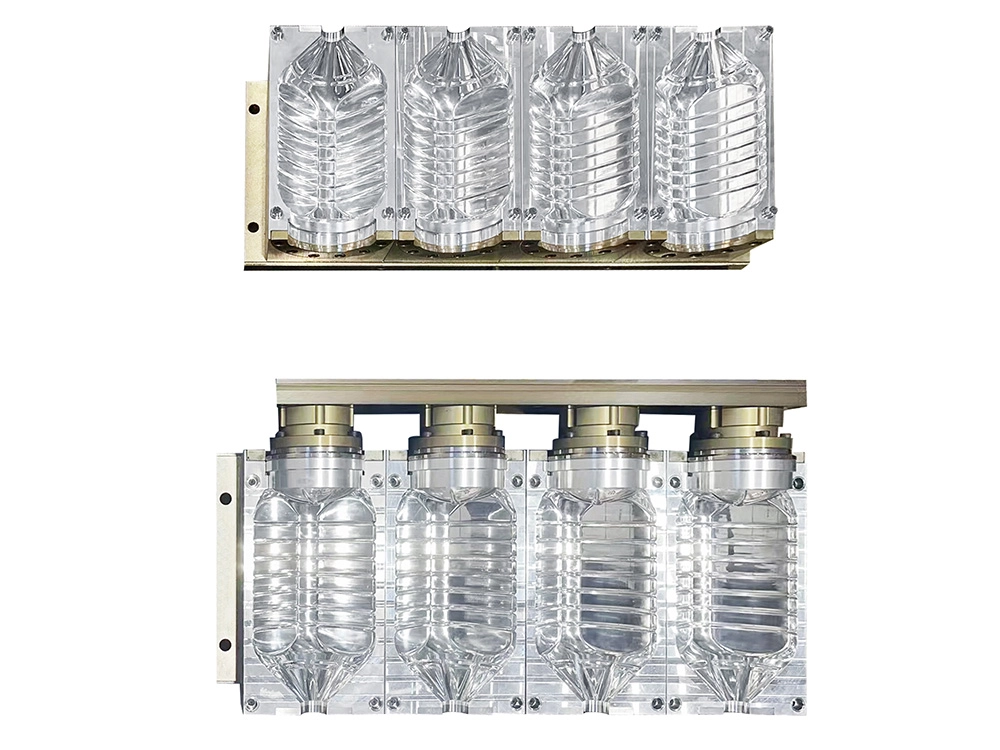
Heavy preforms require stable filling and strong cooling. A balanced hot runner is essential because cavity to cavity weight variation becomes visible in the finished bottle.
Cooling around the core, gate, and neck deserves close attention. Cooling time is often the real production limit. Poor gate cooling may cause whitening, crystallization, or difficult ejection.
Replaceable neck inserts, cores, and cavities are worth specifying. Machine platen size, robot clearance, cooling water capacity, and take out method should be confirmed before mold manufacture.
How Should the Blow Mold Distribute Material Across the Bottle?
Blow mold geometry decides where the heated preform is asked to stretch. Smooth transitions are forgiving. Deep details and abrupt section changes are not.
Shoulder and Sidewall Design
The shoulder needs a controlled transition from the rigid neck to the wide body. Sharp shoulders can pull material too quickly and leave weak zones below the neck.
Ribs and panels can improve stiffness, but only when material reaches them consistently. Decorative detail often creates thickness variation without adding useful strength.
Base Design
The base must sit flat, survive impact, and cool without distortion.
Concentrated corners may crack during drop testing. Excess material may cool slowly and cause rocking. In one trial, the bottle passed the leak test but failed on the customer’s conveyor because the contact ring was unstable. The problem was geometry, not blowing pressure.
Base shape should be reviewed with stretch rod position, cooling layout, and final shrinkage.
Handle Area and Grip Features
Grip zones improve handling, but deep recesses tend to thin at the edges. They require careful heating and material control.
Integrated handles may need orientation control or a different forming concept. A grip should be tested with wet hands and a full bottle—not only on an empty sample.
Which Design Specifications Should Buyers Confirm with a Mold Supplier?
Several details should be agreed before tooling starts. Delaying them usually leads to modification later.
|
Design Item |
Questions to Confirm |
Why It Matters |
|
Bottle application |
Single use or reusable? |
Sets durability requirements |
|
Preform weight |
What range is recommended? |
Affects cost and strength |
|
Neck finish |
Which cap and dispenser standard applies? |
Controls sealing and compatibility |
|
Bottle dimensions |
What tolerances are required? |
Affects conveying and dispenser fit |
|
Production output |
What bottles per hour target is needed? |
Influences machine selection |
|
Blow molding machine |
Which brand and model will run the mold? |
Defines the mold interface |
|
Cooling system |
What cooling capacity is available? |
Limits cycle time |
|
Testing standards |
Which drop, leak, and top load tests apply? |
Defines acceptance criteria |
How Can Manufacturers Prevent Common 5 Gallon Bottle Defects?
Defects should be traced through the full process. Uneven wall thickness may come from preform geometry, lamp settings, stretch rod timing, or venting. Adjusting blowing pressure alone rarely fixes it.
Thin shoulders usually indicate excessive local stretch or poor heating balance. Heavy bases suggest weak material movement. Base cracks may come from stress concentration or poor cooling. Neck deformation often starts with overheating near the support ring.
Cut bottles and measure thickness at fixed points. Appearance is not enough.
How Should a 5 Gallon Preform and Blow Mold Project Be Validated?
Validation should use the actual machine, cap, dispenser, and handling conditions whenever possible. Trial preforms should be blown across a realistic process window.
Measure weight, volume, neck dimensions, wall thickness, base flatness, and shrinkage. Run leak, drop, top load, stacking, and repeated use tests. Check transfer through the blower, filler, capper, conveyor, and dispenser.
A sample may look good on the inspection table and fail after filling. Water weight reveals weak areas quickly.
Conclusion: Preform and Blow Mold Design Must Be Developed as One System
Reliable production depends on coordinated design. The preform must place enough material in the right areas. The injection mold must hold weight and neck dimensions consistently. The blow mold must distribute material without creating weak zones.
Contact HEYAN TECHNOLOGY today to discuss your 5 gallon PET bottle requirements and develop a solution built for your production goals.
FAQ
Q: What is the typical preform weight for a 5 gallon PET bottle?
There is no single correct weight. Bottle shape, reuse requirements, neck design, and resin grade all matter. Confirm the target through thickness analysis and blowing trials.
Q: Can an existing 5 gallon blow mold use a new preform design?
Sometimes. The new preform must match the required stretch ratios, neck finish, heating capacity, and stretch rod setup. A trial is necessary.
Q: Why does a 5 gallon bottle rock after blowing?
Common causes include unstable contact ring geometry, uneven base cooling, excess retained material, and shrinkage imbalance.
Q: Which tests are most important for reusable 5 gallon bottles?
Leak, drop, top load, stacking, neck fit, and repeated use tests are usually the most relevant.