

How to Choose the Right PET Preform Mold for High-Speed Bottle Production
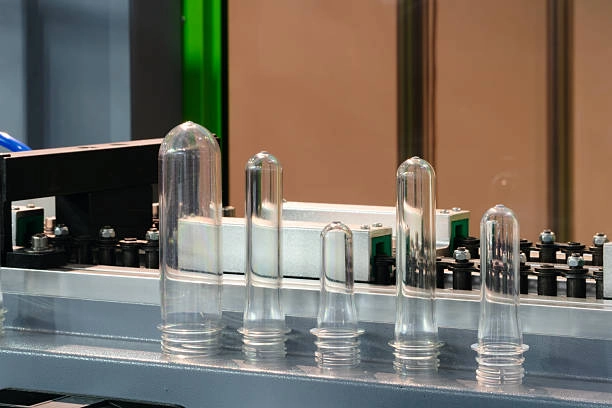
A PET preform mold looks simple on a specification sheet: cavity number, neck finish, preform weight, steel grade, cycle time. In production, those numbers are tied together.
For high speed bottle production, the mold has to do more than make a good preform during a short trial. It must keep cavity weight, gate quality, cooling and dimensions stable over long runs. A few seconds of extra cycle time or a small cavity imbalance becomes significant when production reaches millions of parts.
1. Start with Your Required Production Capacity
Production capacity should determine the mold configuration.
A plant running one blow molding line has different needs from a factory supplying several high speed beverage lines. Higher output usually means a multi-cavity preform mold, but more cavities do not automatically mean better productivity.
The injection molding machine needs enough shot volume and clamping force, while the chiller and hot runner controller must support stable high speed operation.
A common mistake is choosing a larger cavity count before checking the existing equipment. The mold may run, but only with a longer cycle or a narrow process window.
Required preforms per hour, target cycle time and machine capacity should be checked together.
2. Match the Mold to Your PET Preform and Bottle Design
The preform should be designed for the bottle that comes after it.
Preform weight, wall thickness, neck finish and length affect stretch ratio, material distribution and bottle performance. A water bottle, carbonated drink bottle and 5 liter edible oil bottle may all use PET, but their preform geometry is different.
Lightweighting is a good example. Removing one gram from a preform can save substantial resin at high annual volumes. Push the reduction too far, though, and the blow molding window becomes less forgiving. Base thickness may vary. Top load strength may drop.
The mold supplier should review the final bottle application, blow molding machine and expected performance, not only the preform drawing.
3. Choose the Right Number of Cavities
Cavity count is one of the first commercial questions in a PET preform project, but it should not be treated as a standalone target.
A 48 cavity mold running steadily at a short cycle can be more productive over a year than a larger mold suffering from cooling imbalance or frequent maintenance stops.
Check tie-bar spacing, platen size, shot volume, clamping force and mold thickness. The mold needs operating margin, not just enough space to fit.
More cavities also mean more cores, cavities, gate parts, seals and cooling circuits. On a high output line, easy access and interchangeable components save real downtime.
The right cavity number is the one the complete system can support continuously.
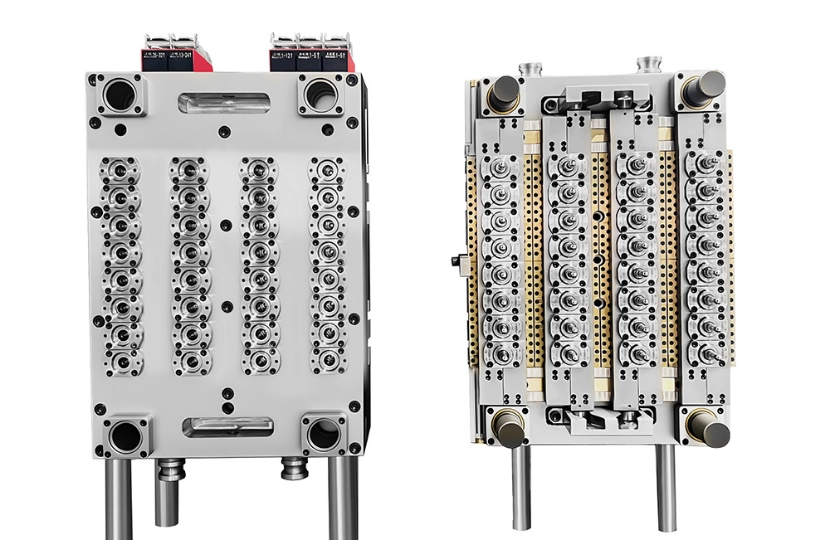
4. Evaluate the Hot Runner System and Melt Balance
In a high cavity PET preform injection mold, melt balance is critical.
Poor balance can appear as cavity to cavity weight variation, short shots or inconsistent gates. Operators sometimes compensate by increasing pressure or changing temperatures. The line may recover, but the cause remains.
A well designed hot runner system should deliver PET melt to each cavity under closely controlled conditions. Runner geometry, nozzle design, gate design and temperature stability all matter.
Preform weight variation is a useful warning sign. If several cavities drift while others remain stable, the hot runner system and filling balance deserve attention.
5. Pay Close Attention to Mold Cooling Efficiency
Cooling is often where the real cycle time limit appears.
The preform must leave the mold with enough dimensional stability to avoid deformation or sticking. If cooling is uneven, the complete cycle may need to be extended just to protect a few hotter cavities.
Good cooling design should provide consistent water flow around core and cavity areas. Large temperature differences between mold positions are a warning sign.
Plants sometimes spend days adjusting injection speed, holding pressure and machine timing while the real bottleneck sits in the cooling circuit.
When comparing suppliers, do not look only at advertised cycle time. Ask which preform weight, water temperature and machine conditions were used to achieve it.
6. Check Mold Steel, Components, and Expected Service Life
High speed production means millions of repeated cycles. Wear is unavoidable, but poor material selection makes it arrive much earlier.
Core and cavity materials should provide suitable hardness, corrosion resistance and dimensional stability. Gate inserts, neck rings and other wear parts should be accurate and practical to replace.
Maintenance is easier when components are interchangeable. If every replacement needs hand fitting, downtime grows quickly. A lower mold price can be attractive during purchasing. The calculation changes when the line stops repeatedly for repairs or cavity dimensions begin drifting.
For production tooling, serviceability deserves almost as much attention as initial cycle time.
7. Make Sure the Mold Is Compatible with Your Injection Molding System
A PET preform mold is only one part of the injection molding system.
Tie-bar spacing, platen size, shot volume, clamping force, ejector arrangement, mold thickness and hot runner control all need to match the machine. Cooling connections and auxiliary equipment matter too.
This is especially important when replacing an old mold on an existing machine. A new preform design or higher cavity count may still need to work with the same injection unit, dryer and chiller. Technical data must be checked before mold design starts.
For a new factory, evaluating the mold, injection machine and auxiliary equipment as one system usually avoids expensive changes during commissioning.
8. Choose a PET Preform Mold Manufacturer with Engineering Support
A mold supplier should be able to do more than machine steel.
Useful engineering support includes reviewing preform drawings, checking machine compatibility, discussing bottle applications, testing the mold and validating samples before shipment.
Production problems are not always mold problems. PET may be too wet. Cooling water may be unstable. Machine settings may not match the new preform. A supplier familiar with the complete injection molding system can usually identify these causes faster.
HEYAN TECHNOLOGY provides PET preform molds together with injection molding system solutions, so mold configuration, output requirements and equipment matching can be evaluated within the same project.
Conclusion — Choose for Stable Output, Not Just Maximum Cavities
A high speed PET preform mold should be judged by stable long run output, not only by the best cycle time recorded during a short test.
Balanced filling, consistent cooling, repeatable preform weight and manageable maintenance usually matter more than an impressive cavity number on a quotation. For a new PET preform production line or an upgrade to an existing system, the mold should be matched to the bottle, machine and required capacity from the beginning.
HEYAN TECHNOLOGY can support PET packaging projects with preform mold design, cavity configuration and injection molding system matching.
FAQ
Q: How many cavities should a PET preform mold have?
The right cavity number depends on required hourly output, preform weight, machine capacity, cooling capacity and target cycle time. A higher cavity count only makes sense when the injection molding system can support it without losing process stability.
Q: What affects PET preform mold cycle time?
Preform weight, wall thickness, cooling design, water temperature, injection parameters and machine performance all affect cycle time. Cooling is often the limiting factor, especially when a few cavities remain hotter than the rest.
Q: How long does a PET preform mold last?
Mold life depends on steel quality, machining accuracy, production conditions and maintenance. Wear components usually need replacement before the main mold structure does. With proper maintenance and stable cooling water quality, a well built PET preform mold can remain in production for many years.