

PET Preform Mold Explained:Structure, Working Principle, and Manufacturing Process
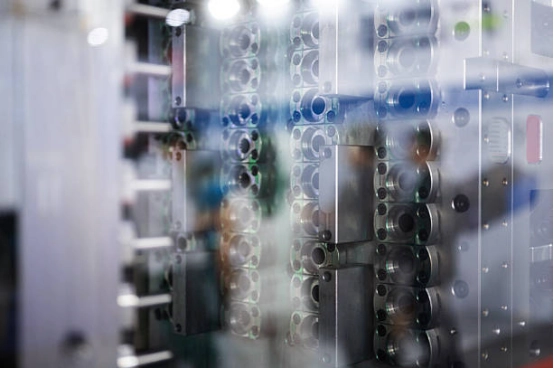
PET bottles for drinks, food, cosmetics, and household goods often start as small tubes. People call these PET preforms. The quality of each preform gets set during injection molding. This happens well before blow molding turns it into a finished bottle.
A PET preform mold serves as a main part in the whole production process. The exactness of the mold changes preform weight regularity. It also shapes neck finish quality. In addition it touches production speed and running costs over many years.
Manufacturers who operate high-volume PET lines need a dependable mold. Such a mold does more than create parts. It keeps daily output steady and predictable.
What Is a PET Preform Mold?
A PET preform mold is an exact injection mold. It produces PET preforms from PET resin. Molten PET goes into the mold cavity under strong pressure. Then it cools and forms a preform with a set neck design and body shape. After that the preform moves to blow molding. There it gets heated and stretched into the final bottle.
The full process runs like this. PET resin moves to injection molding. That creates the PET preform. Next comes blow molding. Finally the finished PET bottle appears.
In current PET packaging lines the mold shapes the performance of the entire system.
The Role of PET Preform Mold in Bottle Manufacturing
The preform determines the foundation of the final bottle.
A well-designed mold helps manufacturers achieve:
-
Stable preform dimensions
-
Consistent material distribution
-
Accurate bottle neck finish
-
Faster production cycles
For example, a beverage company producing lightweight bottles may require very strict preform weight control. A small variation in preform thickness can affect bottle strength after blowing.
Structure of a PET Preform Mold: Main Components Explained
Knowledge of the mold structure helps buyers judge quality before purchase. Every part supports steady production.
Mold Base
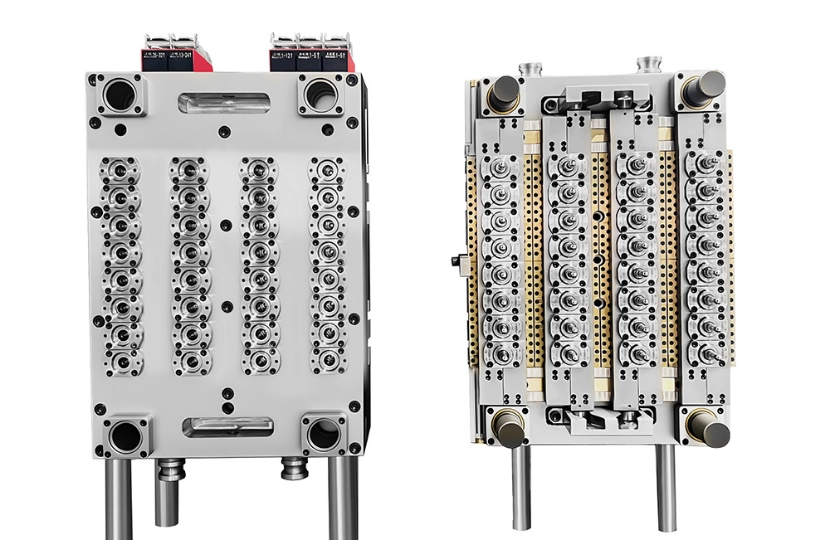
The mold base gives solid support to all other parts. It must stay strong and keep proper alignment through many injection cycles. A weak base or rough machining can create alignment trouble later. This risk grows in multi-cavity injection molds.
Cavity and Core
The cavity and core create the basic PET preform shape. The cavity forms the outside surface. The core shapes the inside.
Accurate machining matters greatly here. Any small size mistake can cause issues in blowing. These problems include uneven walls or shifting bottle shapes.
Hot Runner System
The hot runner system forms a central element in high-performance PET preform molds. It sends molten PET evenly to every cavity. At the same time it cuts material waste.
A smart hot runner design improves flow balance. It also supports even preform quality. In big production lines hot runner quality directly decides efficiency and how often maintenance is needed.
Cooling System
Cooling efficiency determines how quickly the preform can solidify and leave the mold.
An optimized cooling system helps:
-
Reduce cycle time
-
Improve dimensional stability
-
Prevent deformation
In practical production, poor cooling design often appears as unstable output or longer production cycles.
Ejection System
After cooling the ejection system takes finished preforms out safely. A solid ejection design avoids surface marks. It prevents bending and reduces stoppage time.
How Does a PET Preform Mold Work?
The PET preform mold operates through careful injection, cooling, and release. All stages must connect smoothly.
Step 1: PET Material Preparation
PET resin requires proper drying before molding starts. Moisture inside the material can harm quality and create flaws. Good material prep supports steady runs.
Step 2: Injection Filling
Dried PET melts and enters the cavities under high pressure. The fill must reach every cavity in the same way. Uneven fill leads to different weights or quality gaps between cavities.
Step 3: Cooling and Solidification
Once filled the cooling system pulls heat away from the hot PET. The preform firms up into a stable form before the mold opens. Strong cooling lets factories raise speed while quality stays high.
Step 4: Mold Opening and Preform Ejection
When preforms are ready the mold opens. The ejection system removes them. The cycle repeats without pause in normal production. For busy plants mold dependability strongly affects daily output.
PET Preform Mold Manufacturing Process
Creating a PET preform mold calls for exact engineering. The process covers design, machining, assembly, and testing.
Mold Design and Engineering Analysis
Design work sets the mold layout. It decides cavity placement, cooling paths, and hot runner setup. Engineers review bottle needs, output targets, and machine conditions first. Clear design cuts later troubles in the factory.
Precision CNC Machining
Exact CNC machining shapes the main parts. These parts must meet tight size rules. Machining accuracy decides how the mold performs. In PET work even small differences count because the mold runs fast for long periods.
Mold Assembly
Assembly puts every piece in place with care. Workers adjust the hot runner, cavity parts, cooling lines, and moving elements. All must operate together without friction before production begins.
Testing and Quality Inspection
Before delivery, the mold should be tested for performance and stability.
Inspection usually includes:
-
Dimensional accuracy checking
-
Injection performance testing
-
Preform quality evaluation
-
Production cycle verification
Key Factors That Determine PET Preform Mold Quality
Buyers should match the mold to their production needs instead of looking only at the first cost.
Number of Cavities
Cavity count sets output capacity. Common choices include 24, 48, 72, 96, and 128 cavity molds. Large drink makers often pick higher cavity counts to lift efficiency.
Mold Steel Selection
Steel type controls how long the mold lasts and how often it needs service. Good steel resists wear better and supports longer runs.
Hot Runner Performance
A steady hot runner system improves material movement and cuts waste. This point grows critical for plants that run without stops.
Mold Manufacturer Experience
A skilled manufacturer understands both mold building and real PET production needs. Design background, custom options, and support after sale matter for lasting partnerships.
Common Problems Caused by Poor PET Preform Molds
Poor mold quality often creates repeated production issues.
-
Uneven preform thickness may come from inaccurate mold design or poor cooling balance.
-
Short mold lifespan can result from unsuitable materials or weak machining processes.
-
High production waste is often related to unstable injection performance or hot runner problems.
How to Choose the Right PET Preform Mold Supplier?
Selection of a PET preform mold supplier needs focus on technical skill rather than price alone.
The supplier must know mold design, cavity choices, and production demands. Exact machining, careful inspection, and test runs show whether the mold will succeed in real use. Companies starting new packaging projects gain extra help from suppliers who offer full solutions.
HEYAN TECHNOLOGY supplies PET preform molds, blow molds, cap molds, injection systems, and full PET production line solutions. Customers can link mold purchase with wider packaging needs through one source.
Need a trusted PET preform mold manufacturer for your next packaging project?
Reach out to HEYAN TECHNOLOGY for custom mold designs and complete PET line support.
FAQ
Q: What is a PET preform mold used for?
A PET preform mold produces PET preforms by injection molding. These preforms later change into bottles during blow molding.
Q: How long can a PET preform mold last?
Service life depends on design quality, steel choice, maintenance habits, and running conditions. Top molds can handle millions of cycles.
Q: How many cavities can a PET preform mold have?
PET preform molds come in many cavity numbers such as 24, 48, 72, 96, and 128. The best number matches the needed production volume.
Q: Why is hot runner important in PET preform molds?
A hot runner system improves material flow. It lowers waste and keeps preform quality even during fast production.
Q: Can HEYAN TECHNOLOGY provide complete PET production solutions?
Yes. HEYAN TECHNOLOGY supplies PET preform molds, blow molds, cap molds, injection systems, and full PET packaging line solutions.

